This feature originally appeared in the Summer 2026 issue of In Trinity, which explored the idea that a community is something we all help to create.
From childhood games on the school fields to leading Trinity’s Estates team through its biggest transformation in decades, Dean Sammut and Phil Jupp know almost every corner of the school. We meet the duo helping to shape Trinity’s next chapter.
There are few people who know Trinity quite like Dean and Phil. They know the service tunnels beneath the Quad and the loft spaces hidden above classrooms. They know what it takes to turn the Concert Hall from an assembly space into an evening performance venue, keep hundreds of doors unlocked and secure, and ensure everything is ready for another busy school day.
They also know the school from a rather different perspective.
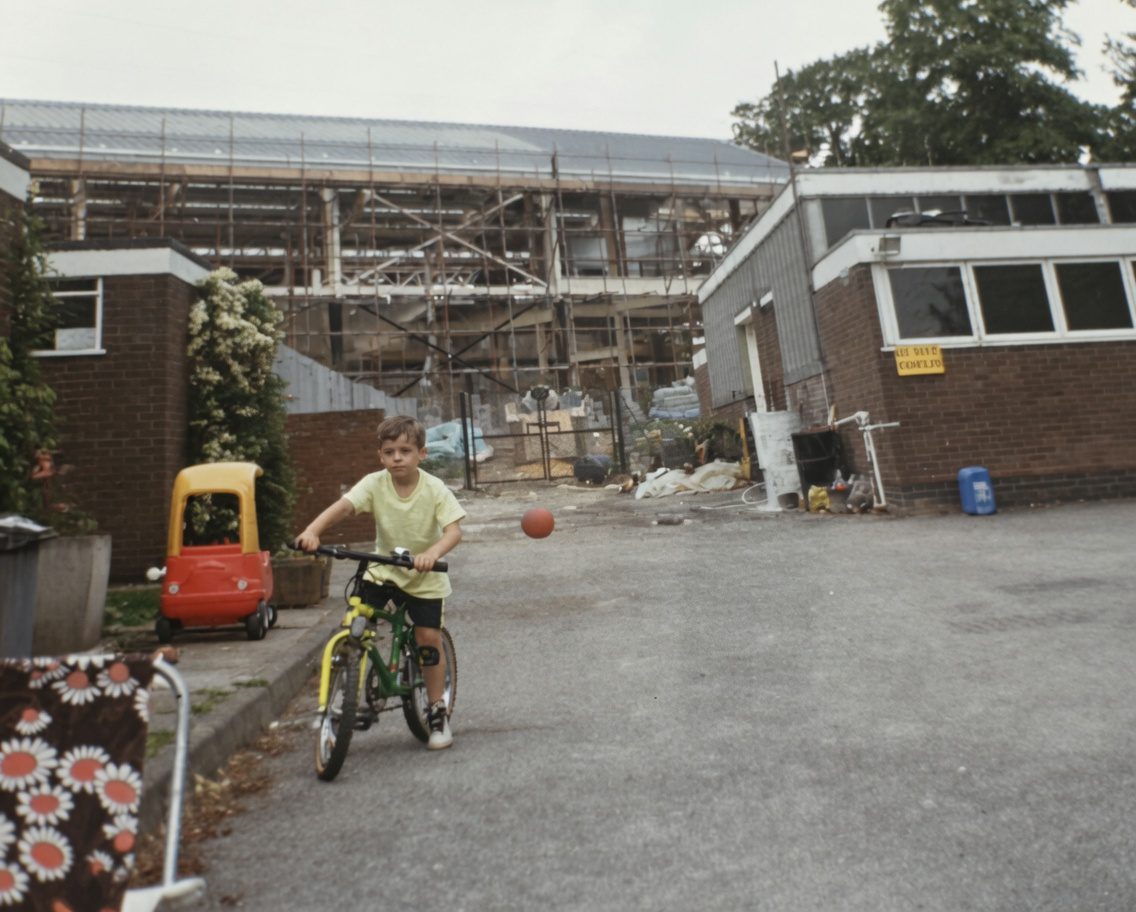
Dean moved into one of the cottages on site when he was four. His father, Mario, was Trinity’s Head Porter for 29 years. “It felt like living in a palace,” Dean remembers. “The grounds became my playground. It was a child’s paradise.”
Phil’s connection also began through family. His father, Dave, was Head of Maintenance, and as a teenager Phil spent several summers helping around the school before joining the Estates team full-time in 2008.
Dean followed in 2011. Although they had known each other through football for several years, working together quickly cemented a friendship that remains as strong today.
Back then, their role was known simply as ‘porter’. The work involved opening and securing the site, moving furniture, delivering parcels and preparing spaces for assemblies, concerts and events. It also meant getting to know every corner of the school and almost everyone in it.
“We were always out and about,” Phil says. “You’d see everyone and know what was going on everywhere.”
The school around them has changed dramatically since those early days. Phil has seen the Concert Hall transformed, the Sixth Form Centre created from the old gymnasium, the Music School built and countless other improvements across the site. At the same time, Trinity has become busier than ever, with an increasingly full calendar of performances, sport, community events and weekend activities.
“The school doesn’t sleep,” Dean says. “It’s open seven days a week.”
Today, Dean is Head of Building Services and Phil is Head of Estates. Together they lead a team of around 15 people, overseeing everything from maintenance and grounds to Trinity’s Boetius Outdoor Activity Centre in Wales.
Ask either of them about their favourite part of the job, though, and neither talks first about buildings. “The people,” Phil says simply and Dean agrees, “Trinity has always been such a positive place. There are so many friendly people across every department. You make some really good friends here.”
For Dean, Trinity’s influence extends far beyond his career. After playing professional football, the school funded his coaching qualifications, helping him establish the football academy he still runs today.
“It’s given me everything,” he says. “An amazing childhood, a coaching career and friendships. It’s always felt like home, and I just want the best for the school.”
That sense of community extends to the Estates team itself, whose work often goes unnoticed but touches almost every part of school life.
“The Estates team are the heartbeat and engine of the school,” Dean says. “If they don’t come in, the school doesn’t open.”
The role has changed considerably over the years. Alongside the day-to-day running of the school, the team now oversees everything from health and safety and compliance to energy management, major maintenance projects and the school’s growing programme of events.
Increasingly, they also work alongside students.
Recent meetings with Trinity’s Green Council have helped shape discussions around recycling, water fountains and reducing waste, with students contributing ideas for making the school more sustainable.
Phil’s work often focuses on the parts of the school that few people ever see, from heating systems and electrical infrastructure to solar panels and energy efficiency.
“It’s not necessarily the glamorous stuff,” he says. “But when it goes wrong, everyone notices.”
Dean and Phil have stepped into leadership at one of the most exciting moments in Trinity’s history. As the school moves towards full co-education, a £40 million investment is transforming the campus, creating outstanding new sports facilities, Sixth Form spaces, landscaped gardens and a striking new entrance that will shape how generations of students experience the school.
For the Estates team, it means helping to deliver that vision while ensuring Trinity continues to run smoothly. They work closely with architects, contractors and colleagues across the school, balancing long-term planning with the practical details that keep a busy school moving.
The current dining hall project is perhaps the most challenging phase, sitting right at the heart of the school while lessons, lunches and daily life continue around it. Once complete, future phases of the development will become more self-contained as the transformation gathers pace.
“It’s exciting to see it all coming together,” Dean says. “The plans look fantastic, and it’s going to make such a difference for future students.”
The changes are personal too. The cottages beside the school, where Phil raised his family and Dean spent much of his childhood, will eventually make way for Trinity’s new entrance. One reminder of those years, however, will remain. A blossom tree planted by Dean’s father is being preserved as part of the new landscaping.
It feels a fitting symbol. Trinity is changing, but it is building on strong foundations, shaped by people who care deeply about the place. As the school enters its next chapter, few are better placed to help shape it than two colleagues who have spent so much of their own lives calling it home.
Scroll right to see more stories