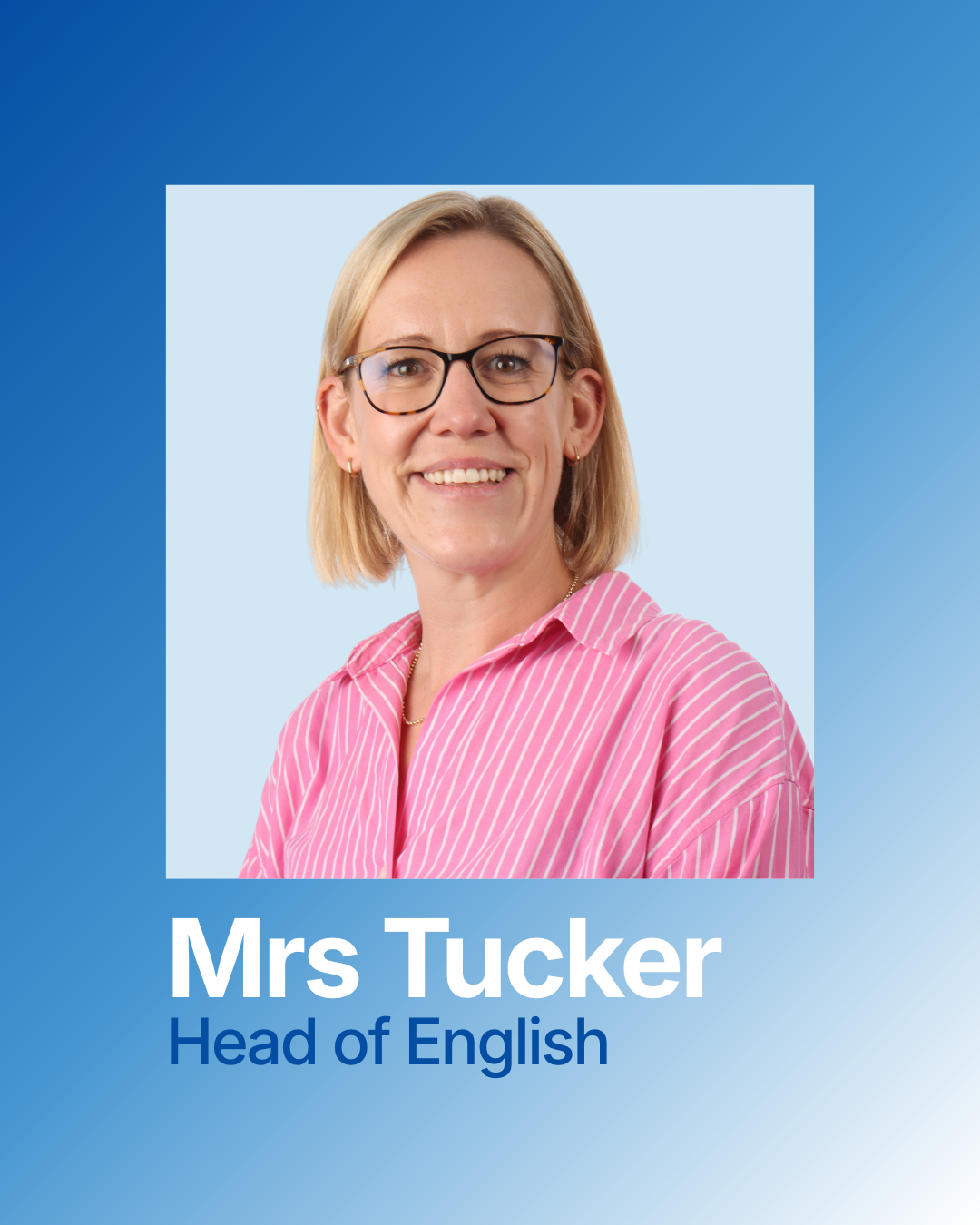
Thank you, it’s great to be here! English is a subject which has to be lived and breathed to be fully enjoyed and the extra-curricular offering of the English department at Trinity was something which really attracted me to the role. The theatre trips, the roaring success of the Literary Society and the longer residential trips to places like The Lake District and New York showed me how much the school values the need to experience literature in its wholeness. Aside from that, the exciting transition to a fully co-educational intake is a fantastic opportunity to think about the breadth and diversity of voices, texts and contexts in all students’ curriculum journeys.
I immediately noticed that all students want to achieve their full academic potential and if I provide a challenge, the whole class will be ready to take it on and give it their all. This enthusiasm and desire to push for the best outcomes fuels the classroom and drives a collective effort on their path to success. Beyond the classroom, this same desire to achieve drives teachers to provide incredibly enriching extra-curricular offerings, whether that is through the exciting theatre trip programme in English or in the cross-curricular collaboration that goes on. This cross-departmental work has really made me feel welcomed as I begin to contribute towards events like Humanities Week or to sixth form girls’ netball.
It was! I come from a long line of teachers and it didn’t take me long to know that I wanted to work in education. My year in a British school in Beijing left me with no uncertainty and I flew home at the end of my contract to immediately begin my training. Working with young people and helping to shape their future is a total privilege and I don’t think that I would ever find the energy that I get from helping students elsewhere. English teaching is particularly brilliant because no matter what educational path students take, reading, theatre and literary culture can provide lifelong enrichment.
Yes, absolutely. During my Masters degree I became really interested in Sarah-Jayne Blakemore’s work on the developmental cognitive neuroscience of adolescents and the argument that teenager’s brains are undergoing a crucial stage of development where the brain is especially sensitive to social experiences. Students are actively developing their identity and independence across secondary school and I always try to provide opportunities for them to develop their own opinions, have their voices heard and feel confident in their own abilities during these crucial years.
I developed a new Key Stage Three English curriculum with a wonderful team who were so enthusiastic about providing a learning journey which provided rigour, diversity of voices and an opportunity for a clear building of skills. Watching students work their way through the first teaching of these texts and hearing their lively corridor discussions and eagerness to build on what they were learning was a really proud moment.
In Trinity’s English classrooms, I want all students to feel challenged, included and changed – not merely prepared for an examination. I want them to be exposed to rich, diverse and demanding texts that expand their knowledge, imagination and understand of other people’s lives. I also want to make sure that all students feel like their voice matters and that through speaking confidently, listening closely and taking part in purposeful discussion, we can all create meaningful relationship which enrich our lives.
At the moment we are reviewing the texts that we teach to ensure that all students can find themselves represented in our curriculum. We are really excited about looking at innovative ways in which we can engage all learners and make sure that we take them on a skills and knowledge journey from the beginning to the end of their English experience.
Scroll right to see more stories