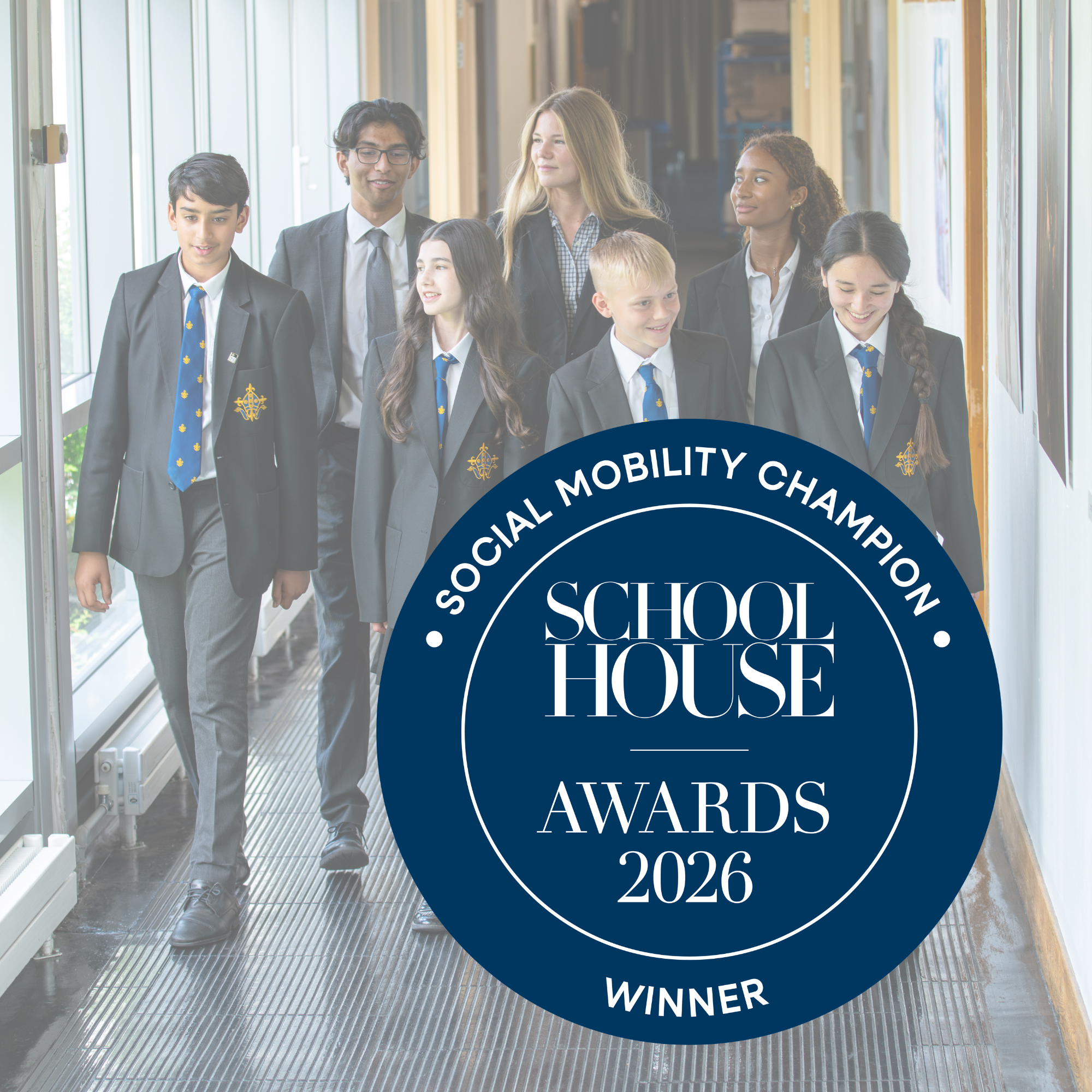
This feature originally appeared in the Spring 2026 issue of In Trinity, which focused on our key value of ‘Responsibility’.
As a value to nurture in young people, responsibility probably gets a bad press. Everyone is up for some curiosity and adventure, or can readily embrace creativity and ambition – values which we have taken as the focus of previous editions of this magazine. But who wants to be ‘responsible’? It can easily be associated with being a barrier to fun, a burden to bear, or worse, simply part of accepting life as a grown-up.
I would rather reframe what we mean by it. As the root of the word suggests, it is about response. How do our students respond to the opportunities they are given at school? If we believe that students are the most important agents in their education, how do we help them to recognise and value that education in the fullest sense? And, more broadly, what is our response as a school to the wider context of the economic, social and cultural changes we see around us?
The 60th anniversary of the school’s move from the centre of Croydon to our current site has offered a moment to reflect on these questions and what matters most in our school community. A consistent theme emerges from this, which resonates across our student, staff and parent body: the breadth of backgrounds and perspectives among our students profoundly shapes everyone’s experience of school, and the people they become.
We have seen this borne out in the impact on our sixth formers of 15 years of co-education so far. They are undoubtedly better prepared for study and work beyond school as a result, and this has been part of our decision to move to full co-education from September 2027. As larger year groups of boys and girls are phased into the school, we will also grow from 1,050 to around 1,400 students in total by 2031.
We have also seen, over many years, the impact of bursaries not just on individual students but on the student body as a whole. It is widely recognised that the broader the range of backgrounds and perspectives represented in a community, the richer the learning and the stronger the outcomes for everyone. Young people growing up and rubbing shoulders day-to-day with those from different socio-economic backgrounds, as well as with the opposite sex and the different racial backgrounds that make up South London, experience that richness of learning first-hand here.
Beyond any diversity statistic, it is the sense of belonging that makes the difference. As one new Sixth Former said to me in my first year as Headmaster, nearly ten years ago: ‘I came from a state school. Private schools have a reputation for being a closed club, but I was immediately made to feel welcome by students and teachers.’ That simple comment has stayed with me ever since.
As the school moves forward, we believe it is a central part of our responsibility to maintain, and increase as best we can, the diversity of our student body and to nurture an ethos that genuinely welcomes all. In this environment, our young people can truly belong and thrive.
Scroll right to see more stories