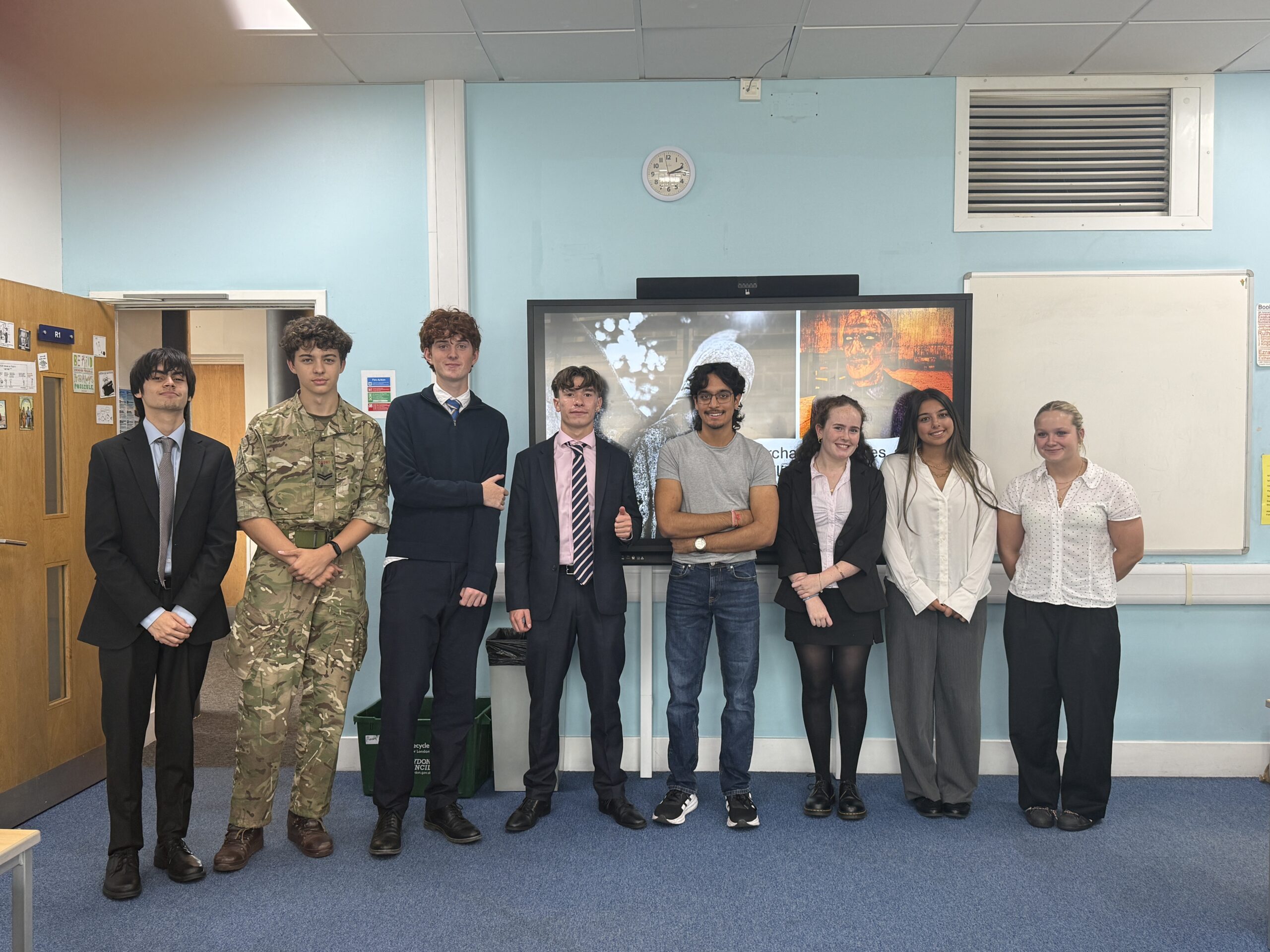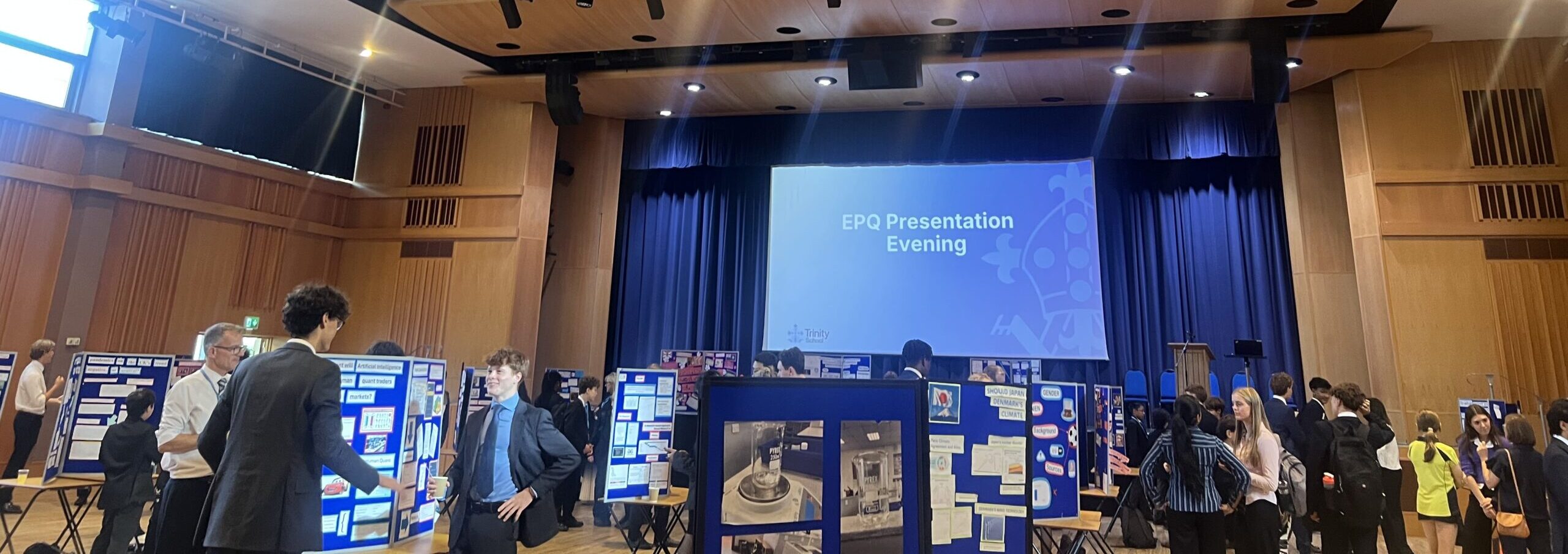
Parents, staff and students gathered at the Trinity Concert Hall this week for our annual EPQ evening, where 55 Upper Sixth students presented their findings, explained their research goals and outcomes while taking questions from guests.
The EPQ is part of the Trinity diploma programme and sees students undertake a research-based independent project of their choice, presenting their findings through a dissertation or physical artefact. This year featured a wide range of topics on show, with students considering some of the world’s biggest debates and issues.
Highlights of the evening include:
Ali
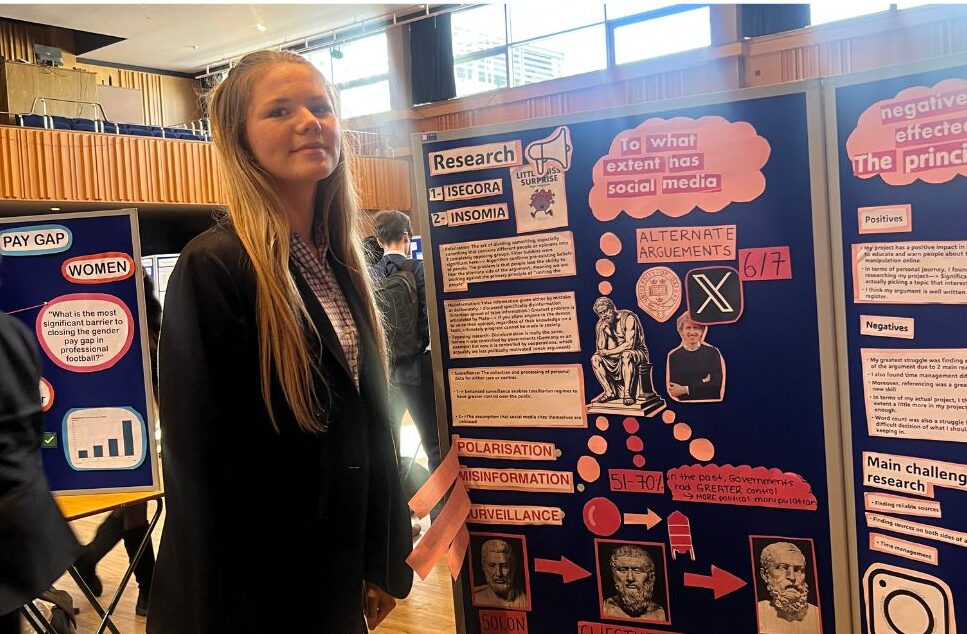
Inspired by her interests in Law and Philosophy, Ali investigated the question, “To what extent has social media negatively affected the principles of Athenian democracy?”
Through extensive research into the history of Athenian democracy, Ali identified three key threats posed by social media before applying these ideas to a case study of the 2016 US presidential election.
Reflecting on her research Ali said, “Initially I had my own bias that I felt social media definitely did undermine the principles of Athenian democracy, but I found that through listening to a podcast by Philip Knightley social media allows for everyone to voice their opinion.”
Ali hopes to go on to study Philosophy and English at University, with Cambridge University as her primary goal.
Jonathan
Aspiring to study History at Oxford University, Jonathan drew on his love of literature, exploring the topic of psychological debt in Russian literature. Explaining the reasoning for his choice of topic he said, “I’ve always had a deep love for literature, especially Eastern one. So, I decided to pick Russian literature because I had a lot of Dostoevsky and Tolstoy’s books at home and I just thought it’d be a good opportunity to show off my work to other universities and just have a lot of fun writing an essay by myself.”

Helena
Hoping to pursue a degree in Civil or Architectural Engineering, Helena explored the question “Can 3D printing revolutionise prosthetics in terms of functionality, accessibility and innovation potential?”
Through studying current gaps in the industry, Helena identified key underserved groups of people including those in lower-income countries and children who lack access to appropriate devices.
Helena came to the core argument that 3D printing can fill these gaps by enabling rapid iteration, “For children 3D printing is a technology that can create iterations very quickly. So, as a child grows, they can modify just a part of their prosthetic device instead of having to buy a completely new one.”
Avi
Avi explored the topic of AI in finance, asking “To what extent should current AI-driven algorithmic trading replace human traders in high-frequency and execution trading roles within global financial markets?”
Through examining AI training models which used new machine learning technologies, he found that these systems could be better suited than humans for high-frequency trading roles.
His research also highlighted important questions around responsibility. He noted, “This also raises a problem of accountability because these models are created by massive companies. We don’t know who to put the blame on when they cause markets to become more unstable and more volatile.”
Avi has plans to pursue a degree in Maths and Economics at LSE.
Anna
Hoping to pursue a career in law, Anna looked at the role of gender bias and how it has influenced the witchcraft trials and modern UK law.
Explaining her research Anna said, “I looked at factors like the economy and religious politics for the witchcraft trials. For modern UK law, I looked at how the application of the law can disadvantage women but also benefit women and disadvantage men.”
Anna concluded that gender bias in the witchcraft trials was considerably more explicit, compared to the modern UK law where it is considerably more implicit.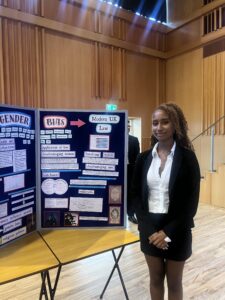
Sam
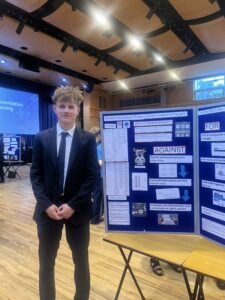
Preparing for a career in Law, Sam examined the role of plea bargaining in America, exploring the question, “To what extent does the plea bargain undermine the right to a fair trial in the United States?”
His research explored the disproportionate impact plea bargaining has on minorities, and whether its necessity and system benefits outweigh the effect that it has on minority groups.
Sam also faced challenges when conducting his research, “in terms of sources that I had to use it was quite challenging because a lot of them were quite biased and in favour of the plea bargain because a lot of judges were writing them and they obviously have conflict of interest.”
Reflecting on the evening Mr Halliday, Head of EPQ & SFP , said “The Upper Sixth EPQ cohort have investigated an amazing range of topics which consider some of the world’s biggest debates. Student have investigated topics ranging from the impact of socioeconomic status on access to justice in the UK, whether social media impacts the principles of Athenian Democracy and the impacts of Central Banks Digital Currencies on the commercial banking industry. I am immensely proud of their passion and academic diligence; it has been a pleasure to support them through the process. ”
Scroll right to see more stories