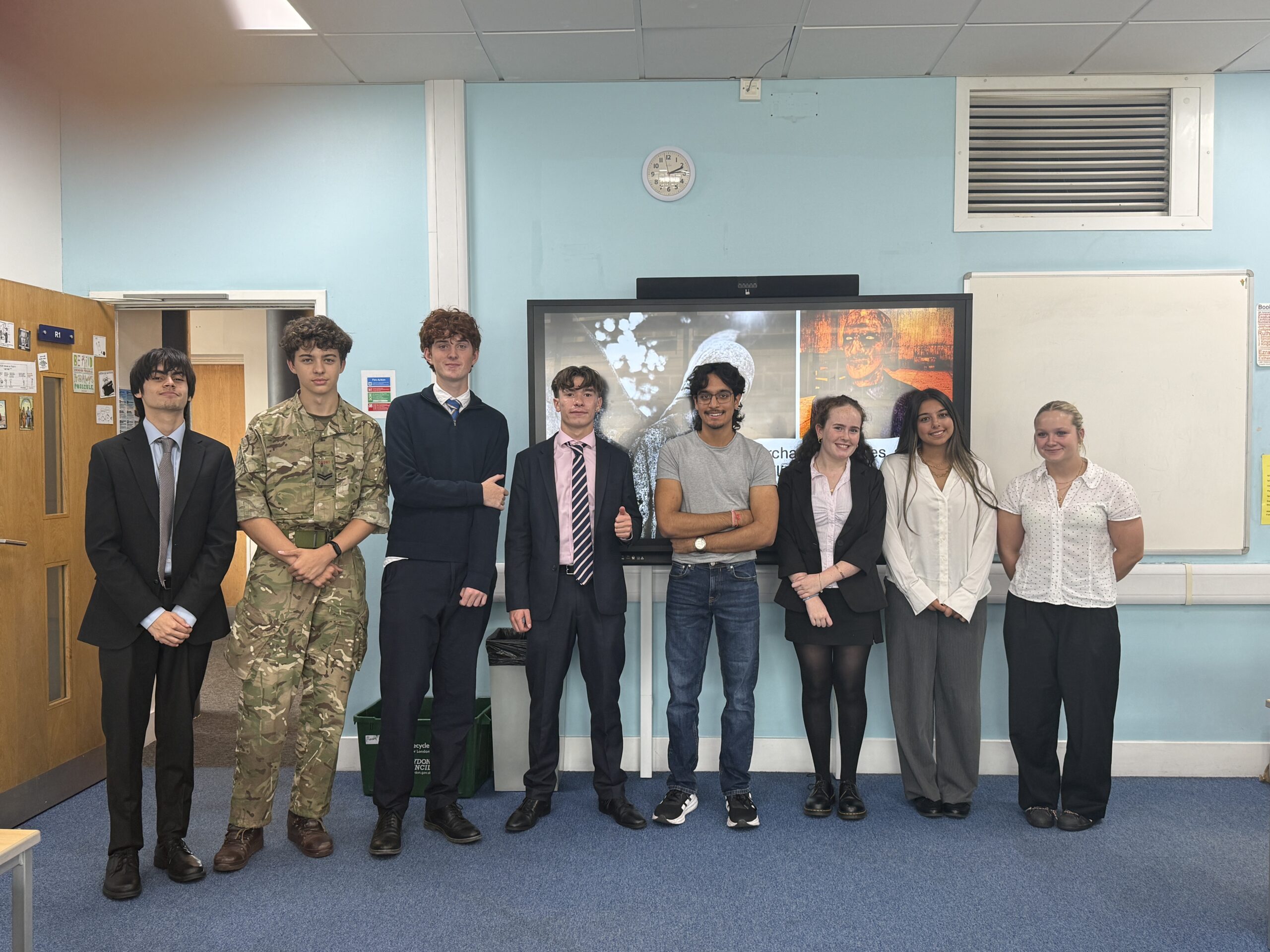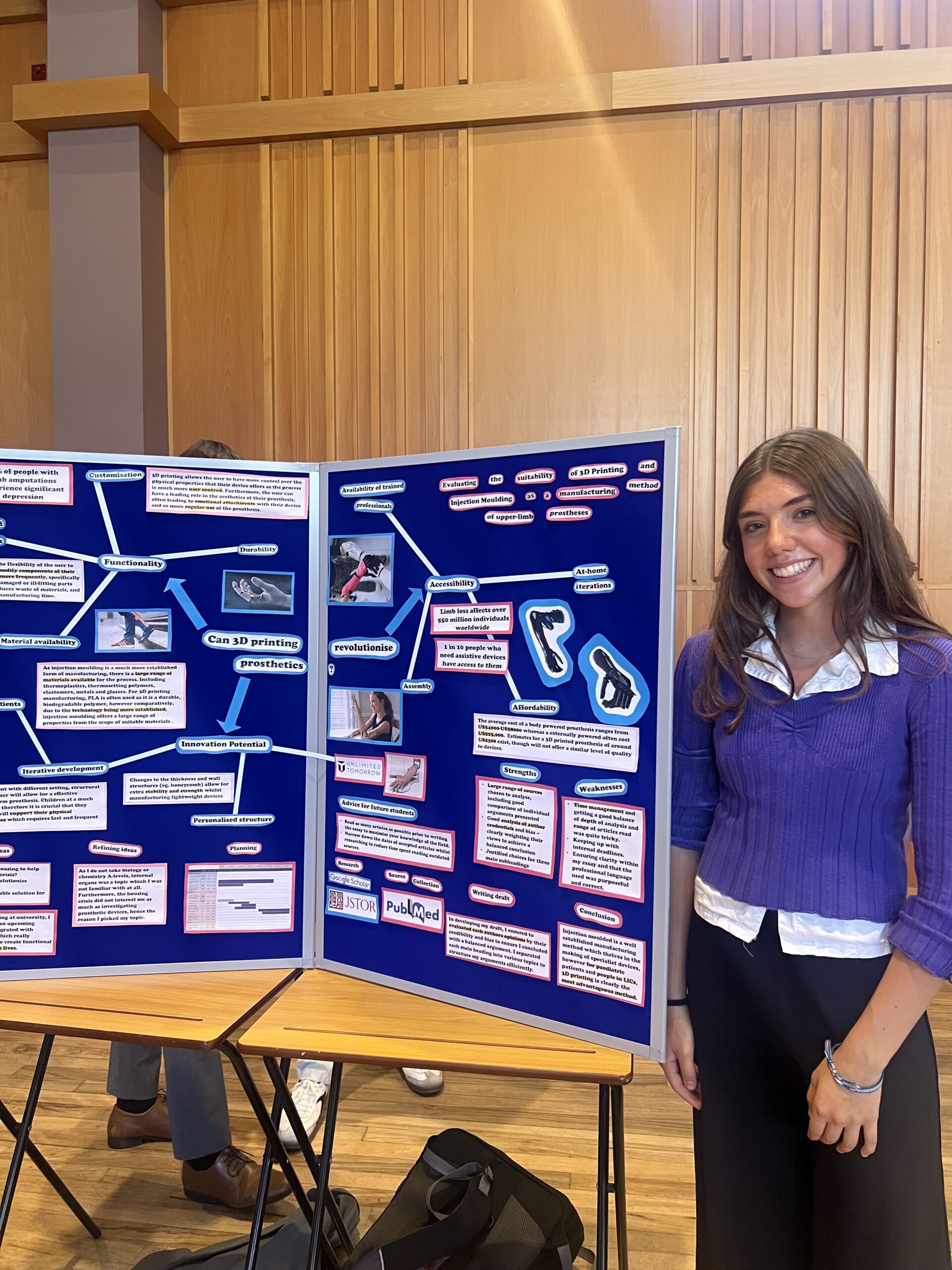
This week, the Trinity Concert Hall was buzzing with conversation, live music and energy as 62 Upper Sixth students presented their Extended Project Qualifications (EPQ) to staff, families and peers. A key element of the Sixth Form Diploma, the EPQ gives every student the chance to pursue an independent research project on a topic of their choice, building skills in academic research, critical thinking and communication. It often gives them an opportunity to explore areas they’re looking to pursue at university and are useful additions to future pathways and UCAS applications.
This year’s projects spanned an impressive range – from music, law and anthropology to science, medicine and global issues – and the students were excited to engage everyone in thoughtful, passionate and inspiring discussions.
A few highlights from the evening included:
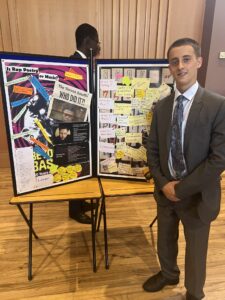
Aadam examined rap as both an art form and a cultural force, asking whether it should be considered poetry, music – or both. Drawing on his love from a young age of Benjamin Zephaniah and spoken word, he explored rap’s roots in oral tradition and performance, its links to beat and metre, and its role in modern theatre. His research included an interview with Corey Weekes, the co-founder of theatre company That’s A Rap, attending the Southbank Literary Festival, and visiting exhibitions on Black British music.
“Rap is both poetry and music,” Aadam concluded. “It brings art forms together and should be accepted as part of both traditions. Through this project I discovered just how much rap can challenge, inspire and connect people – and writing and performing my own work made me appreciate the craft even more. It was a lot of work, but because I picked a subject I was so passionate about, I really enjoyed it.”
Aadam is applying to universities including Oxford, Edinburgh and Exeter for a Classics and English double honours degree, where there is the opportunity to tailor his course towards spoken word.
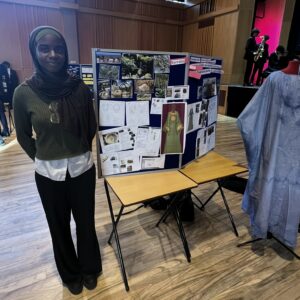
Madinah chose to create an artefact for her EPQ and explored how well fashion can work as a storyteller in relation to narrating the changes and preservation of culture, using the Gullah-Geechee community and the Rice Coast of west Africa as a case study. Using fashion as her medium, Madinah researched traditional textile techniques and designed a dress that embodied the story of survival, resilience and cultural continuity.
Her work connected directly to her family heritage, drawing on interviews with her grandmother and great aunt about Sierra Leonean culture, and combining them with academic research. Madinah said, “I wanted to uplift my culture. This project gave me a way of exploring my heritage and connecting with my family history. Making the dress was such a powerful process, because I could take everything I’d learned and turn it into something tangible. As part of the process, I decided I want to study Anthropology at university, so it gave me the motivation to continue the project, even when it seemed a lot of work.”
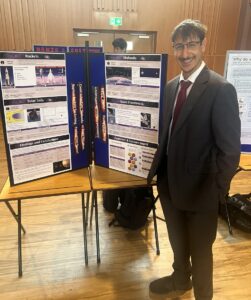
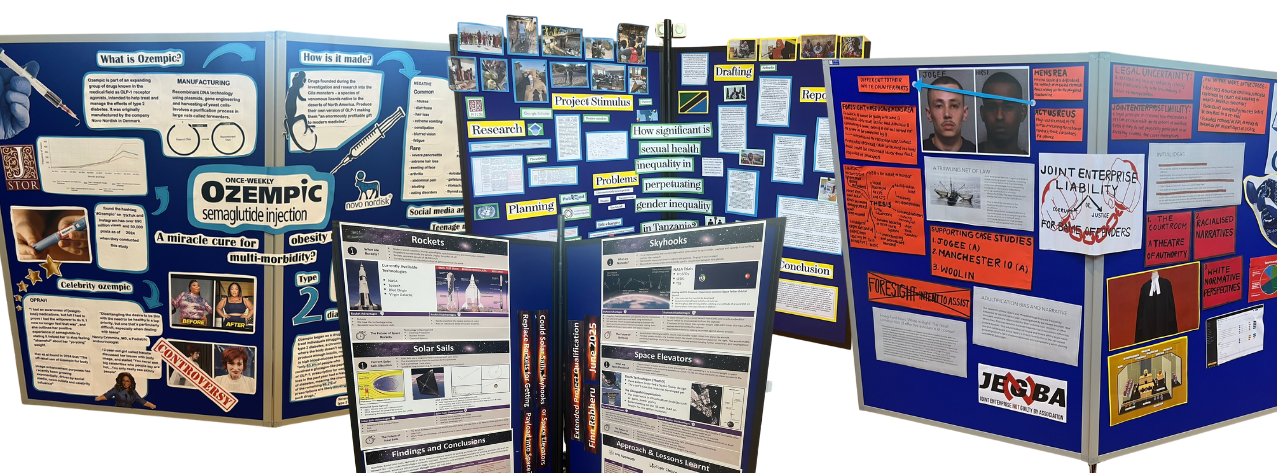
Finn: Spaceflight alternatives to rockets
Aspiring to study aerospace engineering, Finn’s EPQ allowed him to look towards the future of space travel. He investigated technologies such as solar sails, skyhooks and space elevators, asking whether these ambitious concepts could one day replace rockets for carrying payloads into orbit. His research spanned physics, engineering and science fiction made real.
“I’ve always been interested in space technologies, and my research was centred around the sustainability of rockets and so I looked into three alternatives. For example, a solar sail acts like a regular sail, but instead of wind it uses radiation from the sun. It’s completely free, and over time it can build momentum up to around 300 kilometres per second.”
The project also sharpened his research skills: “I think the biggest thing I learned through the process was how to research properly – analysing every source for whether it was reliable or biased, and deciding what could be trusted, for example I discounted a quote from Elon Musk stating that skyhooks would never be viable because of his vested interests.”
Anna: Joint Enterprise and legal uncertainty
Anna, who plans to pursue law, explored the complexities of joint enterprise liability and its relationship to legal uncertainty. Her project focused on the way unclear interpretations of the law can lead to unsafe prosecutions, particularly affecting young and minority ethnic defendants.
“My biggest challenge was reading legal documents written by professionals. They’re complicated and verbose, and it’s hard to simplify something that isn’t simple to begin with.”
Through the process she developed a key academic skill that will serve her well in her chosen field: “Probably the most important skill I’ve learned is how to write an understandable essay about a complex subject – making it logical and structured for any reader.”
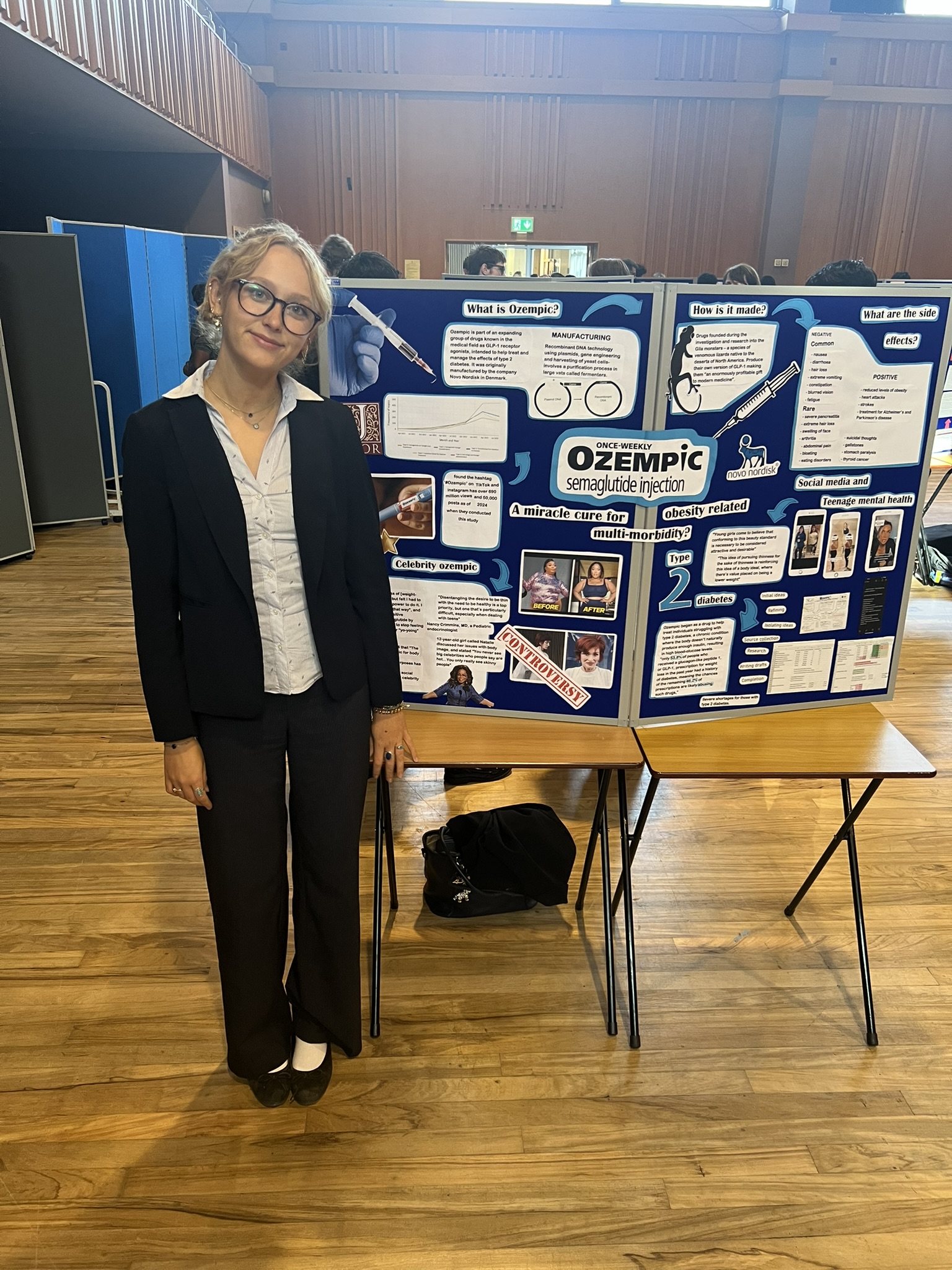
Tilly explored whether Ozempic is ‘A Miracle Cure?’
Tilly, who has ambitions in medicine, explored the science and social impact of Ozempic, a drug widely discussed for its potential in treating obesity-related conditions. Her project examined how the drug works, the ethics of its accessibility, and whether it could truly be called a ‘miracle cure.’
“I had seen so much about Ozempic coming up on my social media, including adverts for other weight loss options and it made me curious about the biology behind it.” Studying A Levels in Biology, Psychology, Geography and Religious Studies, Tilly could draw on all her subjects to tackle the topic. Her conclusion? “I think it is a miracle cure that needs to be used more responsibly. At the moment it’s way too accessible, and that’s leading to dangerous off-brand versions,” she said.
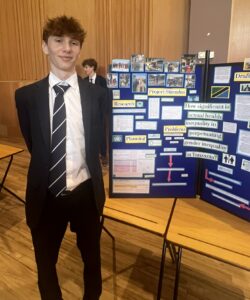
Jacob: Sexual Health Inequality in Tanzania
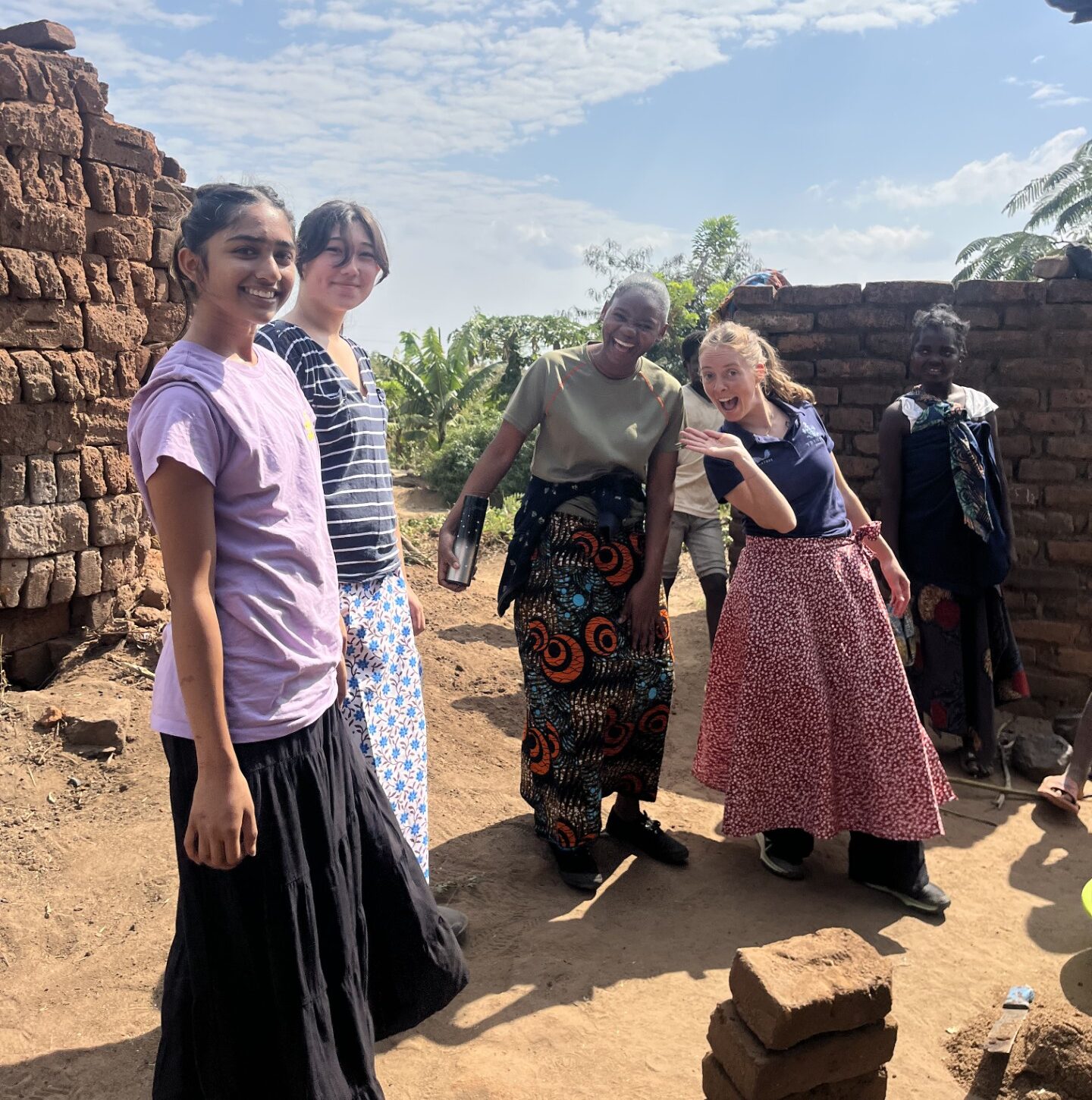
Deputy Head of School Jacob, who hopes to study law, drew inspiration from his volunteering trip to Tanzania for his EPQ. His project examined how sexual health inequality perpetuates gender inequality, analysing outdated legislation, education systems, and the role of leadership in shaping progress.
“Volunteering there before I started in Sixth Form really exposed my privilege, but you feel a bit helpless, you can’t change the world in two weeks. So this project was my way of self-educating, recognising my privilege and also spreading awareness.”
Like many of his peers, he also reflected on the discipline the EPQ required: “I started really broad and had to narrow my topic down, which helped. Time management was one of the biggest challenges. You’re doing three A Levels alongside it, so you have to keep on top of things with little-and-often work.”
Scroll right to see more stories