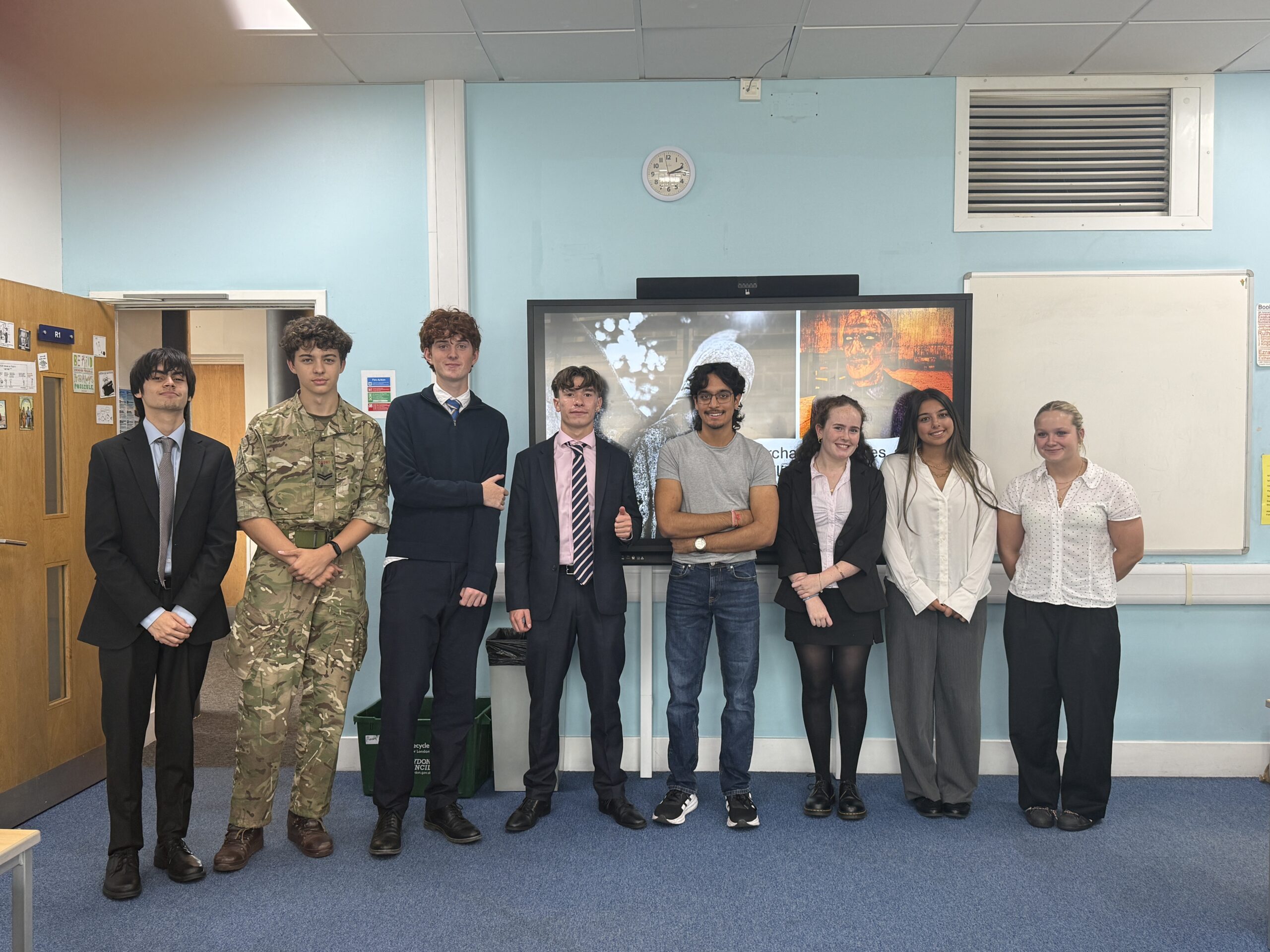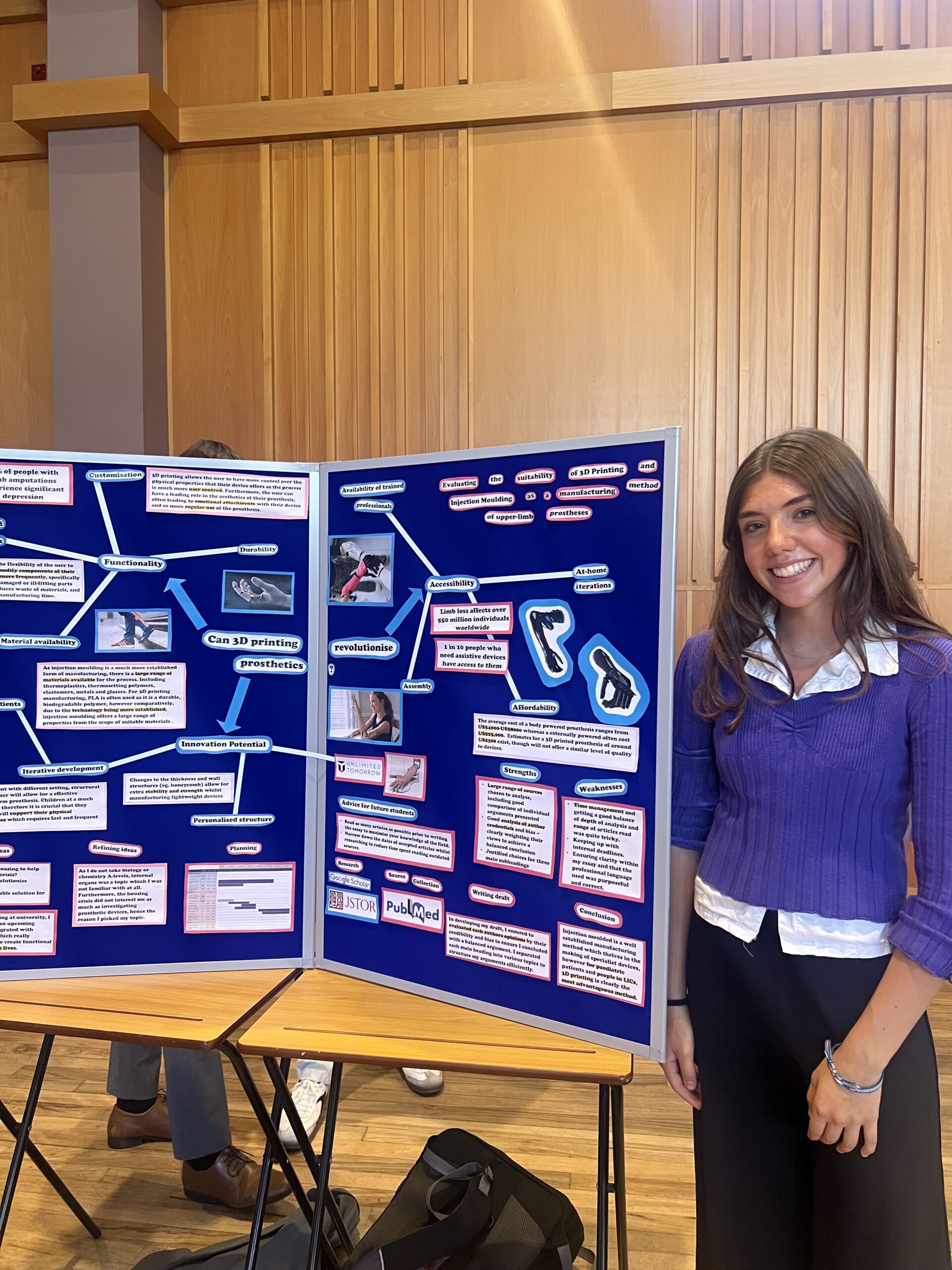

Congratulations to Upper Sixth student Ansh who was recently presented with a Gold Crest Award from the British Science Association for a robot he has been developing which can sterilise operating theatres and monitor blood oxygen levels in underfunded and understaffed hospitals.
Gold Crest Awards are highly sought-after awards that are presented to students for long-term, in-depth projects of their own design.
We caught up with Ansh to learn more about the project and where his inspiration came from. He says:
“Engineering is about solving problems, and for me, the best place to start was close to home. In parts of rural India, government hospitals are underfunded and understaffed, leading to serious complications in patient care. A big issue is iatrogenic infections—infections picked up during treatment because of improper sterilization. We have advanced methods like hydrogen peroxide vapour and autoclaving, but those can cost over $200,000, which just isn’t realistic for these hospitals.
“Another problem is staff shortages. In some hospitals, one nurse can be looking after 60 patients, when the WHO recommends a maximum of six. Constant patient monitoring isn’t possible. So, I asked myself: Could I build something that makes sterilisation cheaper and lightens the workload on nurses?
“That’s when I came across UVC light—it kills 99.99% of pathogens, and an industry-grade source costs just £60–£100. The only issue is it’s dangerous to humans upon exposure. My idea was an autonomous UVC sterilisation robot that shuts off the UVC light if a human is detected. I couldn’t test it with real UVC due to regulations, so I modelled it with an LED.
“To go a step further, I also built in a SpO₂ sensor (blood oxygen levels) with an AI model I developed, so the robot could track patients’ oxygen levels in real-time and the AI model could classify dangerous readings—reducing the need for constant manual checks.
“I called the robot Chitti 2.0, after a Tamil movie character I loved as a kid. The first Chitti was an Autonomous Road Quality Surveyor I built last year as part of a project with other Trinity students. However, this project was the most mentally and academically challenging thing I’ve done.
“For three months, I went in circles. The navigation kept failing. The first SpO₂ sensor gave readings so inconsistent it might as well have been making them up. Half the time, I didn’t even know what was wrong. I’d fix one issue, and three more would pop up.
“After endless debugging, hardware swaps, and retraining the AI model, it worked. The robot was built just to see if I could do it but seeing it recognised by the British Science Association was great.
“Like most engineering projects, it’s not done yet. There’s so much more I could add to improve the robot: 360-degree UVC emission, better AI, more monitoring capabilities. It’s something I might turn into a real product at university.“
An incredible project, well done.
Scroll right to see more stories