
This feature originally appeared in the Spring 2026 issue of In Trinity, which focused on our key value of ‘Responsibility’
Nicholas Mulroy became Director of Choral Music and Director of the Trinity Boys’ Choir in September 2024, succeeding David Swinson and continuing a choral tradition that has been part of Trinity for more than sixty years.
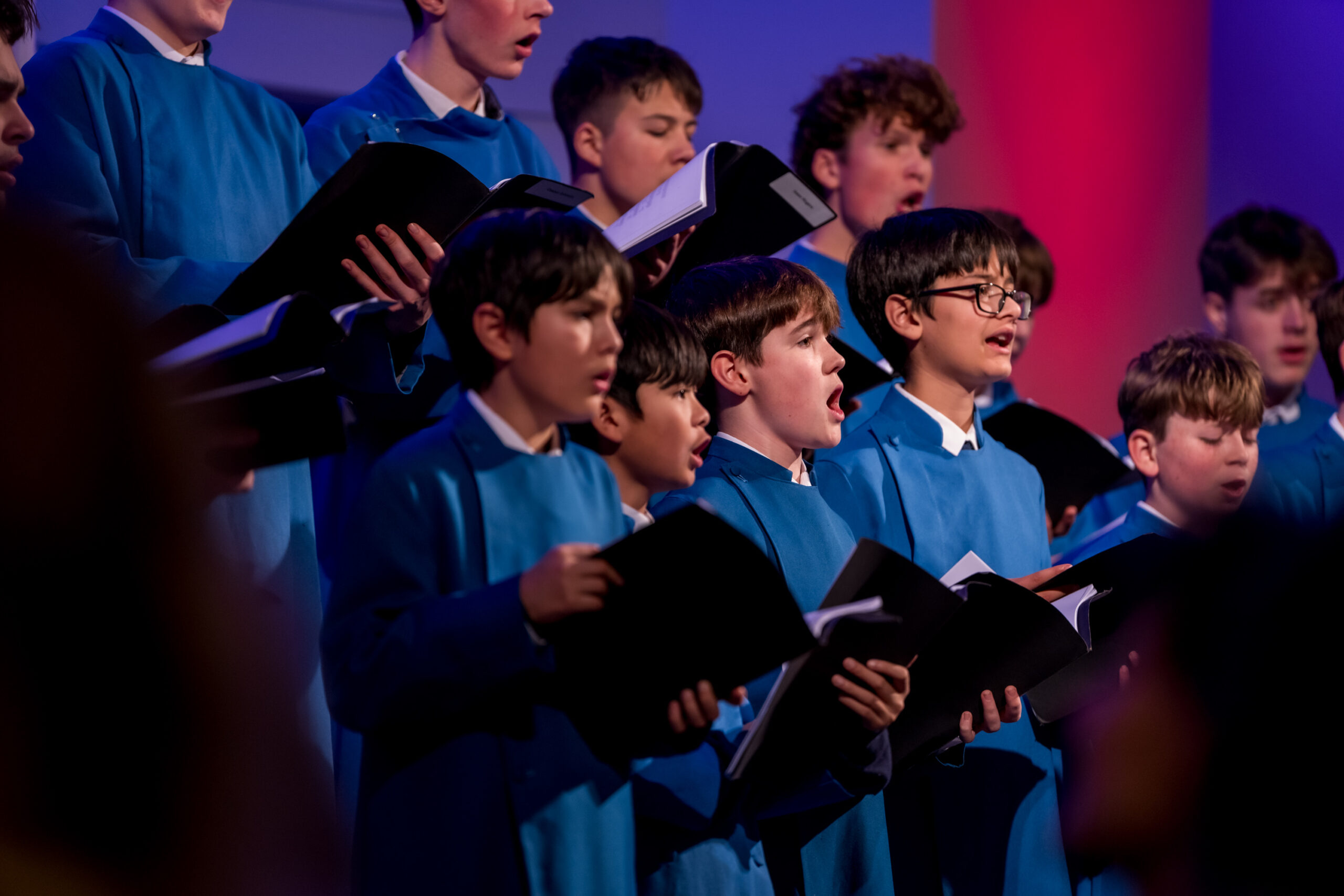
The Trinity Boys Choir is internationally renowned and widely regarded as one of the leading boys’ choirs in the world. Nick, however, approaches the role with characteristic pragmatism. “What was built here – by David Swinson and David Squibb before him – is extraordinary. My first principle was not to make it worse!”
The range of work our choir undertakes is unusual for a school: films, gaming soundtracks, opera, concert tours and large-scale orchestral projects. “The breadth of it is staggering. We don’t want to lose that.”
As Trinity moves fully into co-education, the next chapter is about widening opportunity. “The equity of opportunity is really important,” Nick says. “There are some parts of the musical world that want to protect the boys’ choir tradition at all costs, but we think it’s exciting that girls will have access to the same level of vocal training and professional experience.” While our Sixth Form girls have been singing alongside our boys’ choirs since 2011, working with girls from a younger age will open up new opportunities.
Opera houses and recording projects increasingly ask for mixed children’s choirs. From 2027, we will be able to provide fully trained boys, girls or mixed groups in-house, all trained in the same musical tradition.
Rehearsals will sometimes be separate, sometimes together. “It’s nice for boys to sing as boys and girls to sing as girls,” says Nick. “But it’s also important that they sing together. And professionally, we need to be flexible.” In the studio, that flexibility matters. Our students are used to the pace of professional recording sessions, sight-reading unfamiliar music and synchronising precisely to film in real time. They are trained to respond quickly and calmly. “They just get on with it. Children are incredibly capable if you give them the right support.”
That sense of capability is central to Nick’s vision. He talks about the responsibility students feel as part of a long-standing tradition. “They’re connected to generations before them. When former choristers come back and sing, it’s powerful. They realise they’re part of something bigger than themselves.”
Becoming fully co-educational adds another dimension to that legacy. “I’m really keen to build further musical leadership opportunities lower down the school too, so that we generate the next generation of female conductors and female composers.”
Working alongside Nick is Annie Gill, Head of Singing. Where Nick oversees the choirs as groups and their professional engagements, Annie focuses on the individual voice. She ensures each student has the technical grounding and confidence to step forward alone if required, supporting them through individual lessons and nurturing healthy vocal development at every stage. It is a deliberate partnership: group excellence supported by individual care.
Annie has been developing the Sixth Form Trinity Girls Choir, creating new performance opportunities in school and taking them on their first tour to Oxford earlier this year.
Underpinning it all is a philosophy about singing itself. “Music is everyone’s first and last language,” Nick says. “Children sing before they can talk. Even when speech fades, music often remains.”
For him, music is not an optional extra. “Music and singing are a fundamental part of being human.” It is physical, intellectual and creative all at once. “I can’t think of many activities that are all those things together.” It builds confidence, discipline and joy, often within the same rehearsal.
At Trinity, that philosophy is matched by opportunity. Students can sing simply for joy and friendship in a large choir, or they can pursue a pathway that leads to opera houses, studios and international stages. “There’s space for everyone. And for those who really want to pursue it, we can offer exceptional opportunities.” Few schools combine that inclusive approach with this level of professional experience.
Some Trinity students perform at a world-class level while still at school. More importantly, they leave with confidence, experience and a lifelong love of music.
“The principles of singing are collaboration, listening and self-expression,” Nick says. “They’re about creating something together.”
At Trinity, that shared responsibility – to the music and to one another – is what helps every student find their voice next.
Scroll right to see more stories