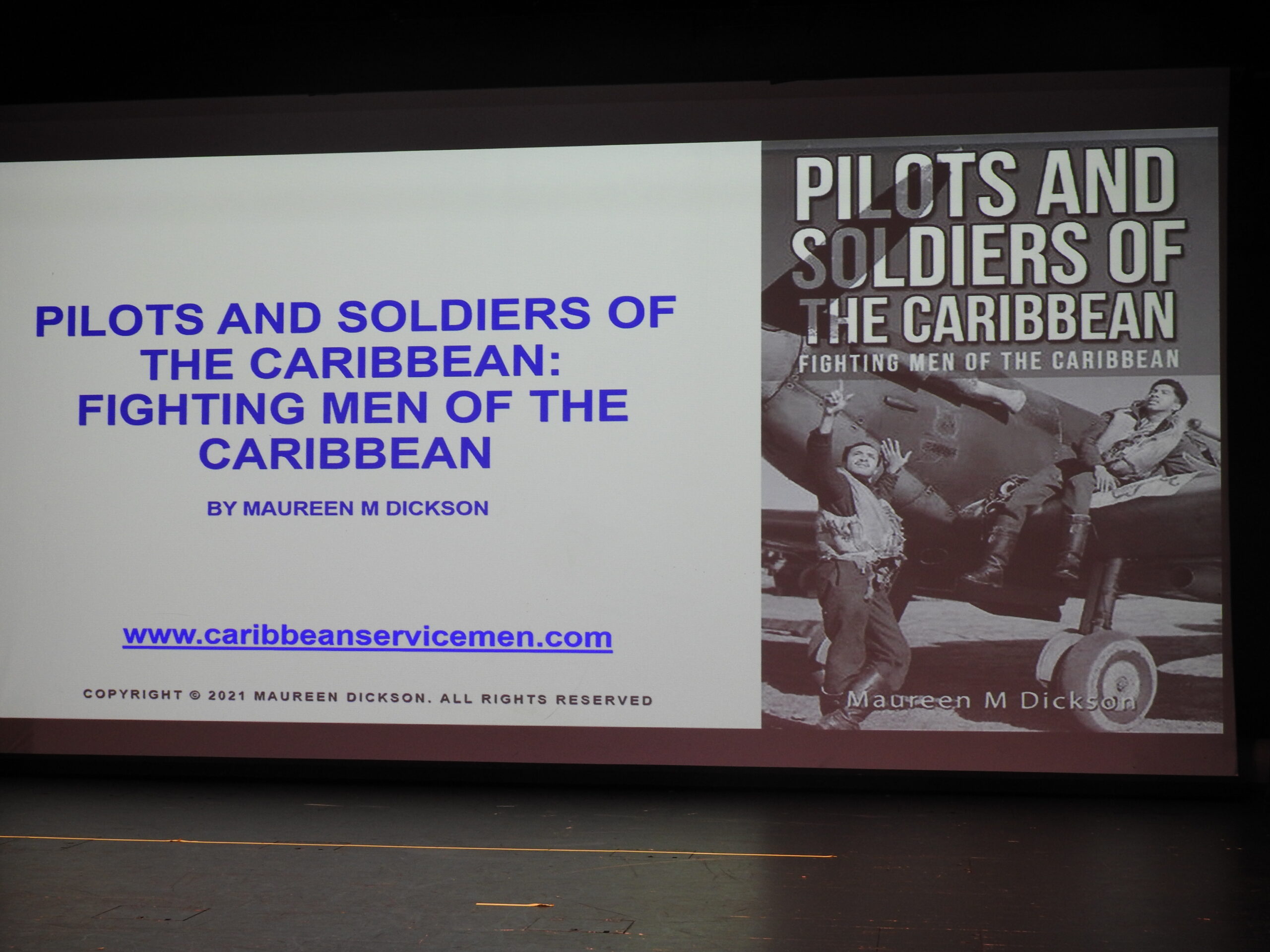
As Black History Month (BHM) unfolded at Trinity, the school community had the privilege of hosting author and oral historian Maureen Dickson for a captivating talk. Maureen’s presentation delved into the remarkable and often untold stories of young Black Spitfire pilots from the Caribbean, shedding light on their exceptional contributions to the British war effort during a time marked by adversity, discrimination, lack of acknowledgement, racism, and rejection. Mrs Lewis, Alumni Relations Manager, reports:
Maureen’s talk was more than just a historical account; it was a heartfelt celebration of Caribbean servicemen who had left their homes, braving hazardous journeys to join ‘The Mother Country’ at the request of King George VI. These remarkable individuals were not conscripted but rather driven by a profound sense of duty and patriotism.
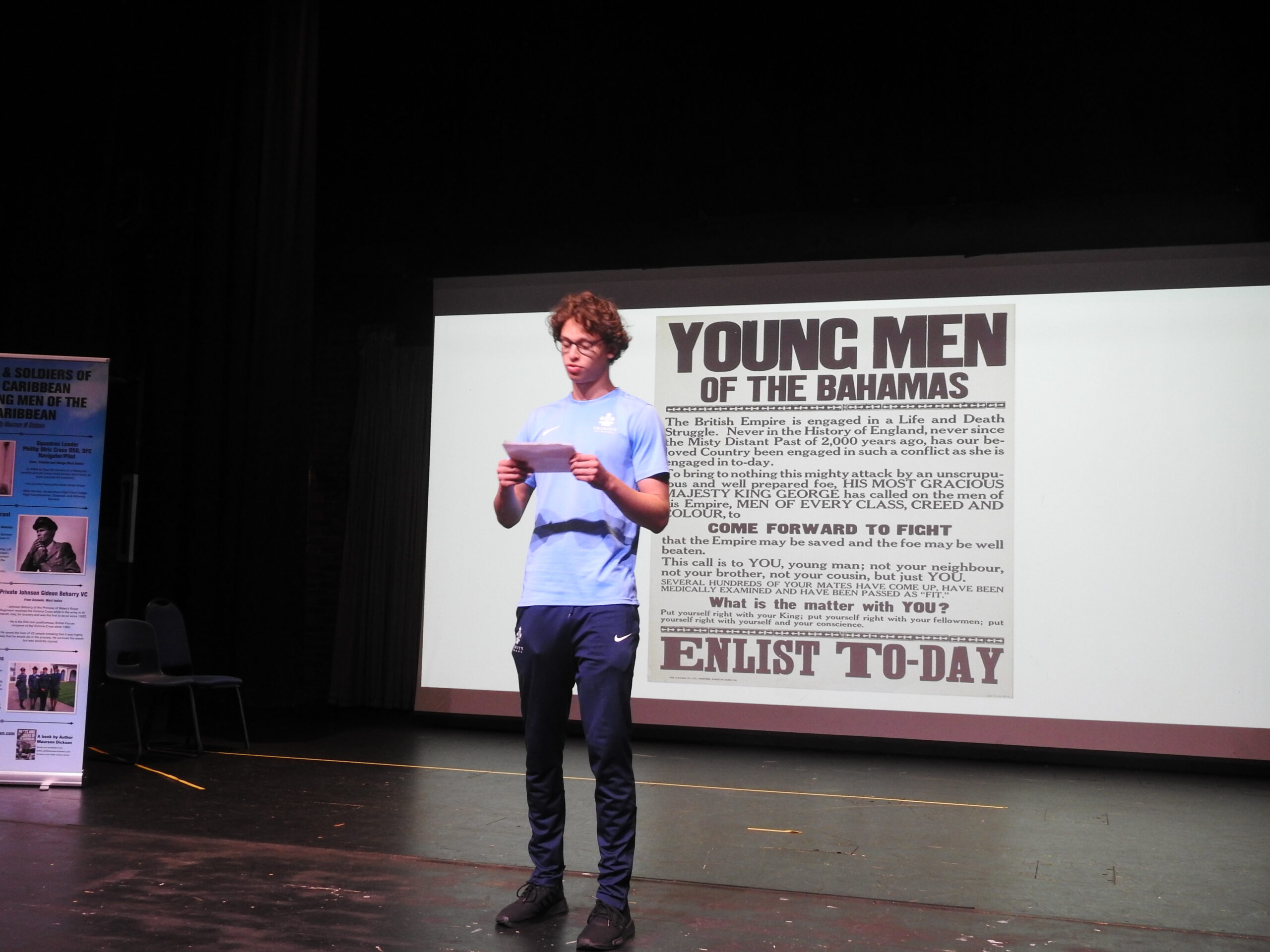
Upper Sixth student Julian, who had led the BHM whole school assembly, delivered the speech in which King George requested men from the Commonwealth countries to sign up and help the UK in their war effort.
“His Most Gracious Majesty King George has called on the men of his Empire, men of every class, creed and colour, to come forward to fight. This call is not your neighbour, not your brother, not your cousin, but YOU. What is the matter with You? Put yourself right with your King, put yourself right with your fellowmen, put yourself right with yourself and your conscience.”
Against the backdrop of an era marred by racial prejudice and inequality, these Caribbean pilots achieved incredible feats. Their stories serve as powerful testaments to their resilience and determination. Maureen painted a vivid picture of their experiences, highlighting their remarkable accomplishments in the face of seemingly insurmountable challenges.
One of the key narratives that Maureen shared with the attentive audience was the role of these pilots in defending the United Kingdom. Many of these heroic aviators flew their aircraft from local airports, such as Croydon Airport and Biggin Hill.
Throughout the talk, the students exhibited genuine interest and engagement. They listened intently to Maureen’s accounts, absorbing the rich history and deep significance of the Caribbean pilots’ contributions. The depth of their questions demonstrated a genuine desire to understand the complexities of the era and the remarkable individuals who played a pivotal role in shaping it.
This talk also resonated with Upper Sixth student Julian, who said:
“I was particularly struck by Maureen Dickson’s point that Black pilots in the RAF were innately very capable, as opposed to being ‘made in the RAF’, as many have tried to suggest, evidenced by their moving on to prestigious careers like lawyers, or the example given of athletes. My own great grandfather fits this profile exactly, going on to compete for GB in athletics at the Olympics serving as a fighter pilot in the RAF during the second world war. It is also clear from high ranking, that some of these men overshadowed many of their white counterparts through merit alone and added much to the RAF, vehemently contradicting many notions, like the suggestion Caribbean pilots were a liability or gained more from their service in the RAF personally than Britain did.”
The harsh reality is that following the war these pilots were not accepted into British society and many had to return to their countries with no support from the UK.
Maureen Dickson’s talk during Black History Month was a poignant reminder of the incredible contributions made by Caribbean pilots to the United Kingdom’s history during a time of great turmoil. It was a celebration of courage, resilience, and unwavering dedication, and it served as a testament to the power of storytelling in preserving and sharing these vital chapters of our shared history.
Maureen concluded her presentation with a lively Q&A session, fielding questions from both students and History teachers. Afterwards, she generously distributed easy to assemble flying gliders to each student present.
Many thanks to Maureen Dickson for her talk and to Mrs Lewis for her write-up.
Scroll right to see more stories