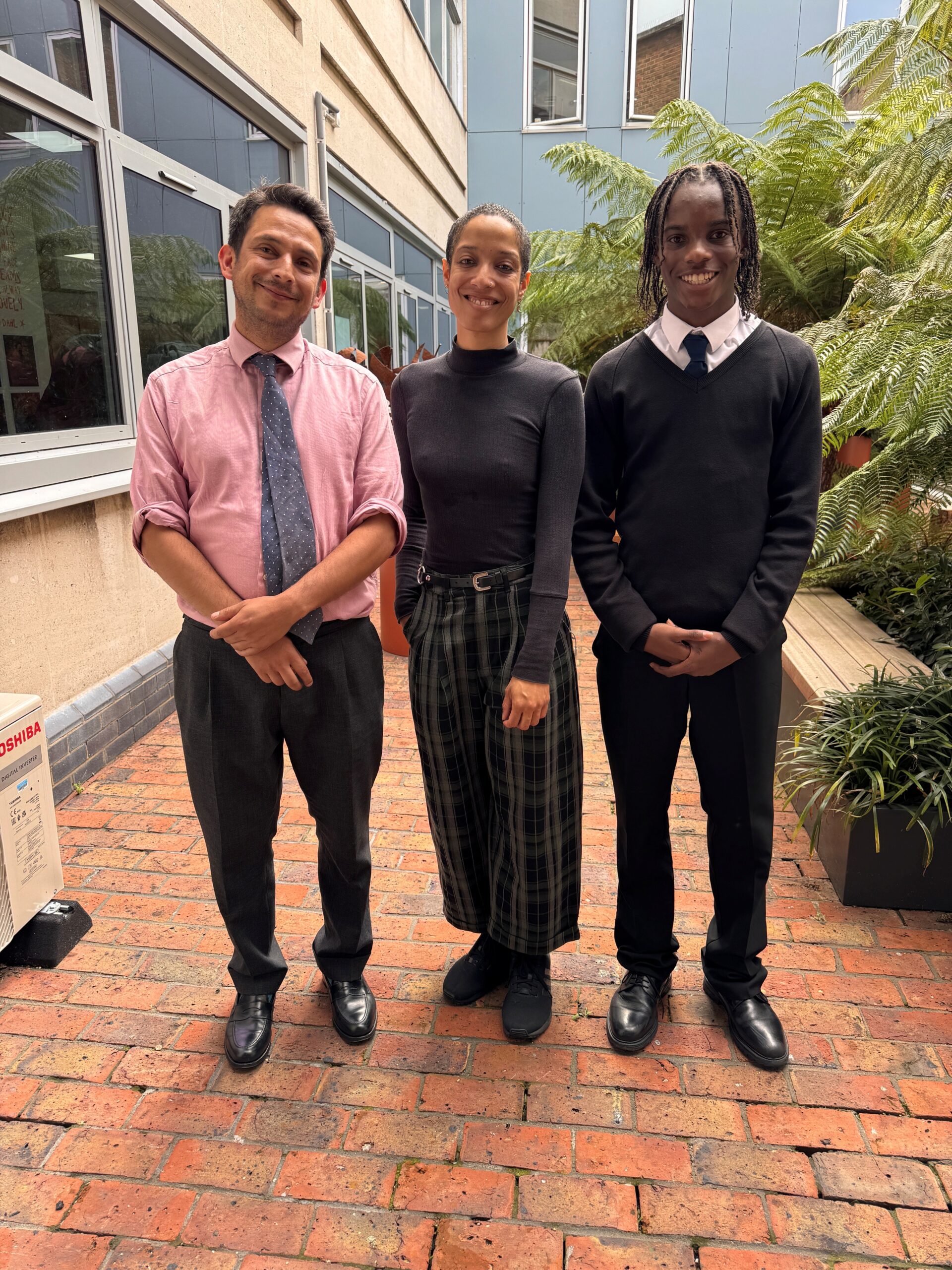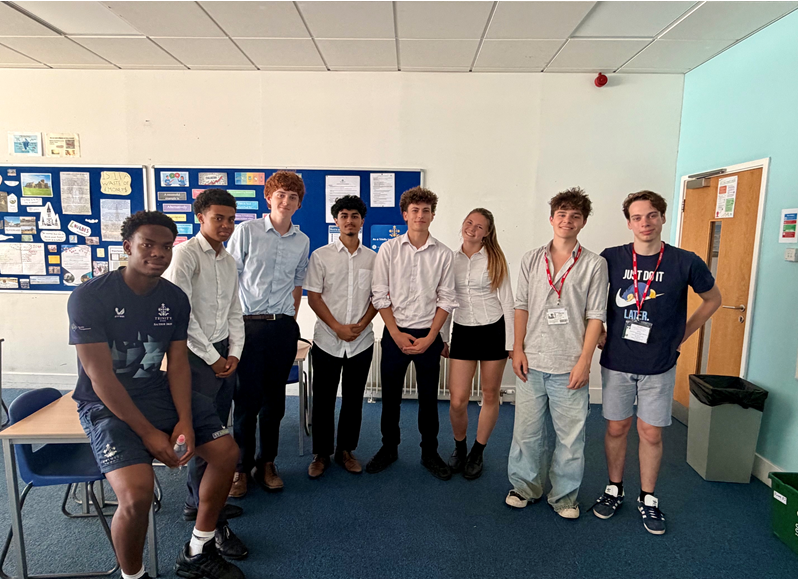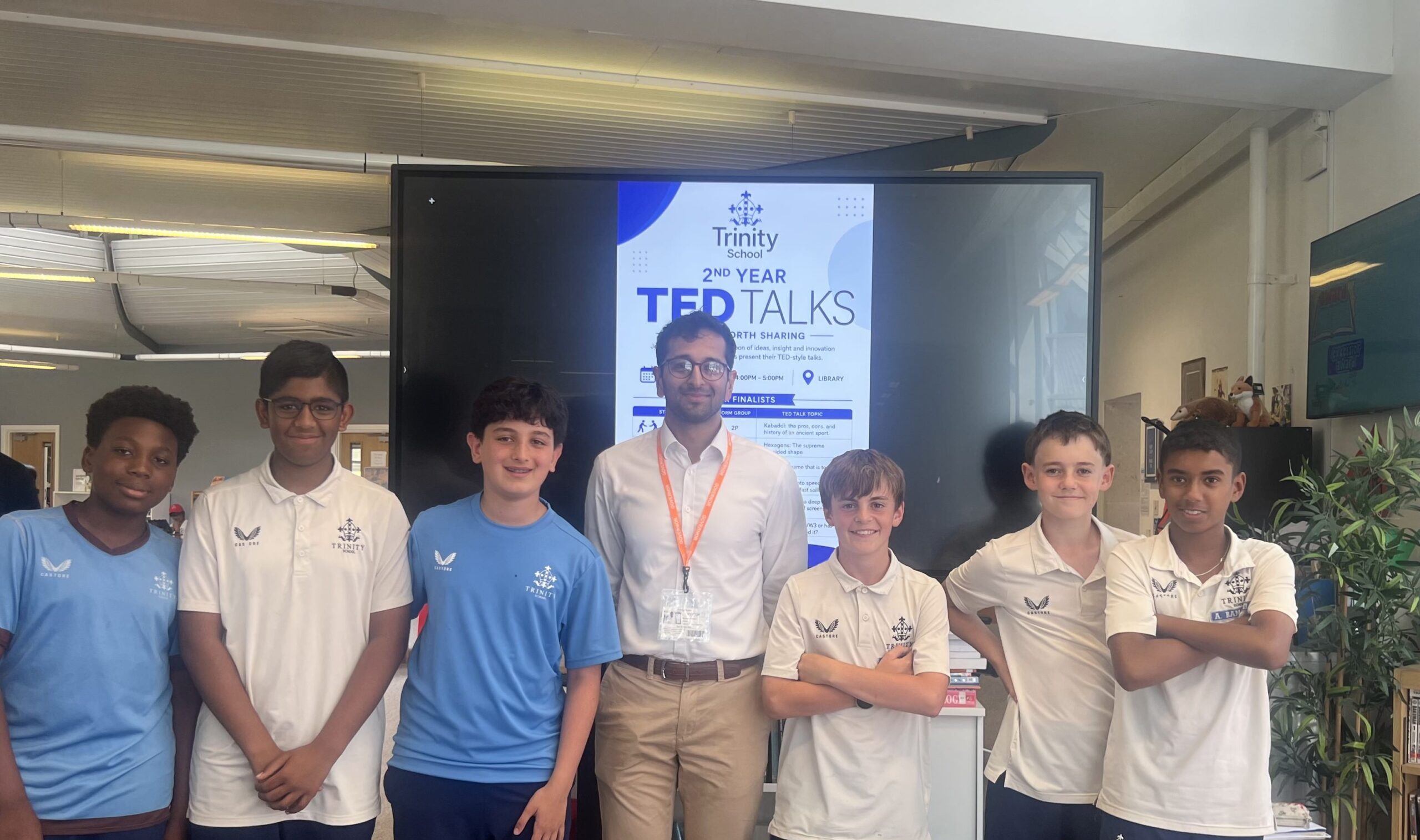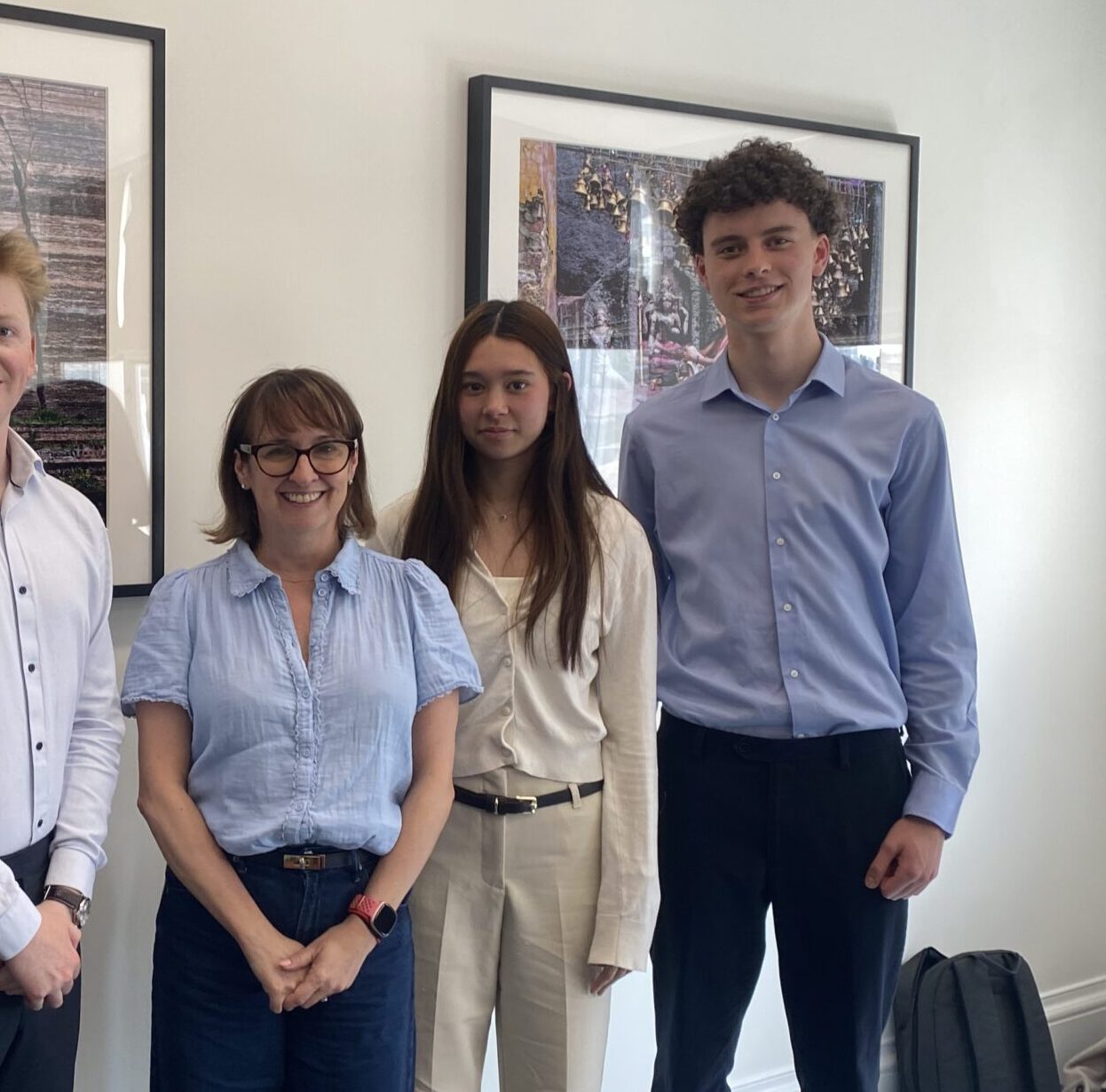
This feature originally appeared in the Spring 2026 issue of In Trinity, which focused on our key value of ‘Responsibility’. What does it mean to be a prefect at Trinity?
For many years, the role was a familiar one. Prefects supported events, took on duties around the school and acted as visible role models for younger students. But feedback from Sixth Form students suggested something important. While they valued the responsibility, many felt the role could offer more opportunities to shape the life of the school.
This feedback prompted a rethink, led by Head of Lower Sixth Sam Hodge.
Following consultations with staff and students, and drawing on ideas from other schools, a refreshed prefect system has been introduced, built around four core values: leadership, endeavour, community and upstanding. Rather than applying to be a prefect in general, students now take on specific roles within key areas of school life, aligned to these values.
The aim is to give prefects greater ownership and a more meaningful voice in shaping the Trinity community.
Prefects now work within committees linked to four pillars of the school: academic, community, co-curricular and EDI. Working closely with members of the Senior Management Team, they help lead initiatives, develop ideas and represent student voice.
The role is no longer defined by duties alone. Prefects still support the day-to-day life of the school, but they are now encouraged to contribute ideas, champion causes and take real ownership of projects that matter to them and to the wider community, bringing a renewed sense of energy to the role.
Academic
For Georgina, the academic strand offered a natural fit. Drawing on her experience as a scholar, she has contributed to discussions around the curriculum, the structure of the school day and how academic life can evolve alongside co-education.
The committee has also explored how the House system might support academic engagement, ensuring there are opportunities for all students to get involved.
“We’ve discussed ideas like house quizzes or debates, so everyone can contribute, not just through sport. Smaller committees also make a big difference, as discussions are more focused and everyone has the chance to contribute.”
Co-curricular
Both Piran and Fatima were keen to get involved in the co-curricular committee, bringing their enthusiasm for sport and drama to the role. Together with other prefects, they have explored how events can be adapted to bring students together more effectively, particularly through the development of the House system.
“It’s been great working with others who share the same ambitions and thinking about how co-curricular activities can evolve,” says Piran. “We’ve talked a lot about how events can be adapted through the House system.”
For Fatima, this is about creating opportunities for connection across the school: “Co-curricular activities are a great way to bring different year groups together. We’ve discussed how events like Sports Day could involve more interaction across year groups, rather than staying within them.”
Community
For Jess, the community strand is centred on building a sense of belonging across the school. From supporting younger students to helping create a welcoming environment through induction days, her focus has been on strengthening connections between year groups.
“I enjoy supporting younger students and contributing to a positive, welcoming environment where everyone feels included. Especially as a female member of the Sixth Form, I wanted to help bridge the gap between the main school and Sixth Form.”
Aadam has also played an active role in the committee, particularly in his work with the Lower School. Alongside organising events such as the House cross-country run, he has helped lead conversations that encourage younger students to think more openly.
“The prefects delivered an assembly tackling the idea that ‘boys don’t cry’, which had a positive impact on how younger students thought about it.”
EDI
Within the EDI strand, the focus is on ensuring that inclusion is part of everyday school life. For Ruby, this is about leading by example and recognising the influence Sixth Form students can have on younger year groups.
“Demonstrating inclusive values as a Sixth Form student can have a real influence on younger students. When we openly respect different cultures and perspectives, it sets a positive example.”
She hopes to see this work continue to grow across the school, saying, “An EDI ambassador group across the school would help raise awareness from an earlier age and involve more students.”
Together, they show how responsibility at Trinity is not just about supporting the school, but helping to shape it.
Scroll right to see more stories