This feature originally appeared in the Spring 2026 issue of In Trinity, which focused on our key value of ‘Responsibility’.
Foundations (1925–1965)
1925 – First rugby season at Trinity
Rugby begins at Trinity School (then Whitgift Middle School).
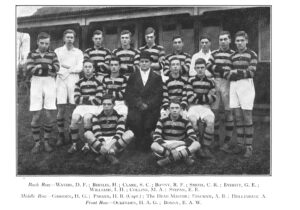
1926–27 – Old Mid-Whitgiftians Rugby Club formed
Former Trinity students help establish the club, linking school rugby to the wider rugby community.
1930s–1940s – Rugby continues through challenging times
Despite wartime disruption, rugby remains a central winter sport, with fixtures resuming strongly after the war.
1950s–1960s – Growth in coaching and standards
A stronger cohort of players begins to emerge, feeding into successful Old Mid-Whitgiftians teams.
1955 – First Trinity Sevens team established
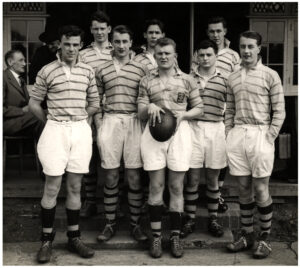
1960s – Trinity rugby kit established
Cambridge blue shirts with chocolate brown stripes become the distinctive Trinity colours (brought back in 2025 for the 60th anniversary).
1965 – Move to Shirley Park
First match at the new grounds played against an invitation XV featuring players from Harlequins and Wasps.
Raising standards (1965–2000s)
1976 – Coaching development under Mike Alexander
Structured training and fitness introduced, raising physical preparation and standards.
1985 – First international tour.
Rugby tour to California marks the school’s growing profile.
1990 – National recognition
1st XV ft. Alex Codling and Shane Roiser named “School Team of the Year” after an unbeaten season. They also tour South America.
2000s – Alumni reach professional and international levels
Notable former students include George Chuter (England), Alex Codling (England and coach), Shane Roiser and Kieran Roche (Premiership).
The modern programme (2000s-Today)
2011 – Girls join Trinity Sixth Form.
The first Girls XV is fielded in 2019, expanding opportunities for female players.
2015 – Hosting the French National Rugby team for the World Cup
Clive Woodward visits with the Webb Ellis Cup to open the Strength and Conditioning Suite ahead of the French team’s arrival. At the time, 1st XV players Gabriel Ibitoye and Charlie Fatoma captained the England U18 team.
2022 – National Cup at Twickenham
Trinity 1st XV triumph at Twickenham, beating Kirkham Grammar School 15-10.
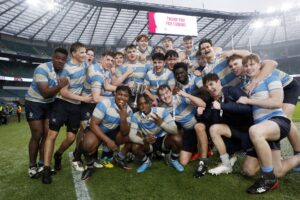
2023 – National Cup Finalists
Trinity returns to Twickenham for the final.
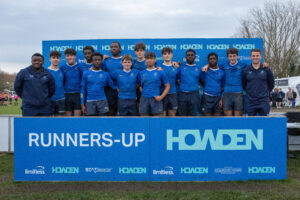
2024 – U16s reach the final of the Rosslyn Park 7s
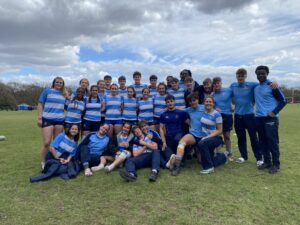
2025 – Girls achieve top-12 finish at Rosslyn Park 7s
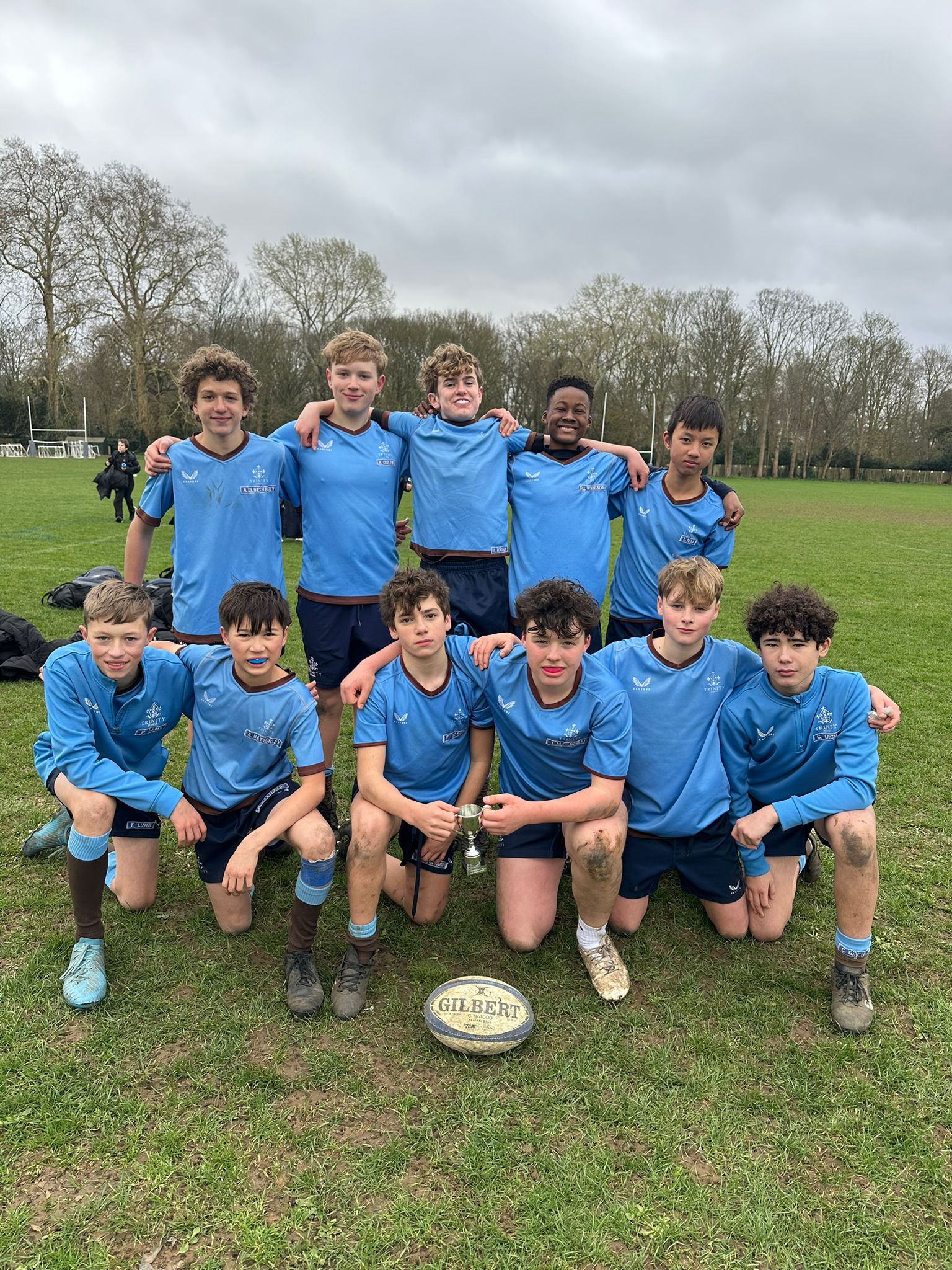
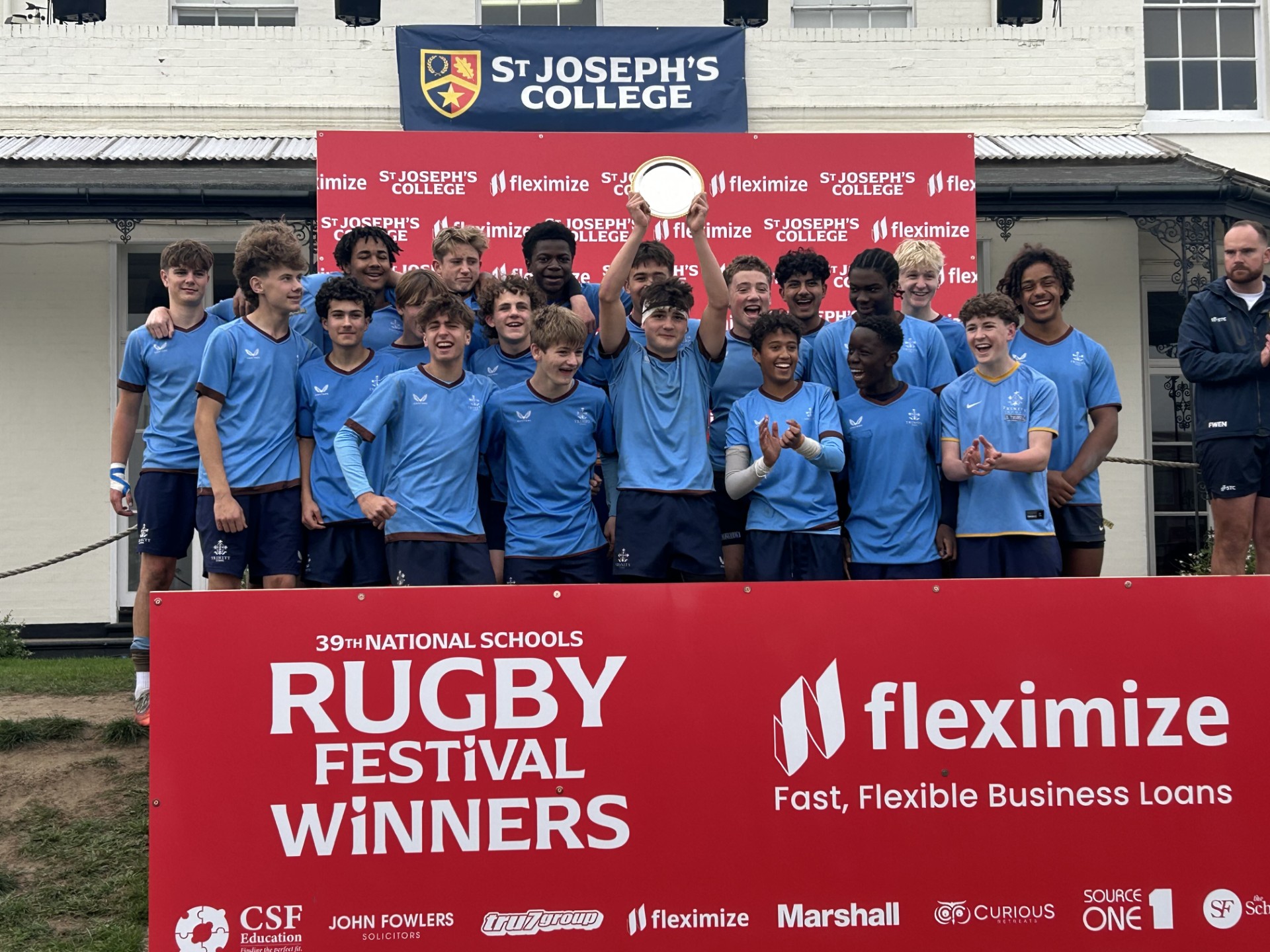
2025/26 – U15s success
Wins at St Joseph’s Plate, Surrey 7s and London Oratory 7; participation at a high, with 25 teams playing regularly.
Recent professional pathway graduates
During their time at Trinity our students our able to develop and get themselves involved in elite, professional pathways, we have many students in the Harlequins Academy pathway, in the last four years we have had 14 students represent Harlequins U18s and five students called up to the England U18s with 6 students signing contracts upon leaving the school: Conor Byrne (Harlequins and England U18), Josh Bellamy (Harlequins and England U18/U20), Lucas Friday (Harlequins and England U18/U20), Jack Vas (Toulouse), Kaiden Watson (Harlequins) and Henry Laidlow (Harlequins and England U18).
We also regularly have boys playing for the England Lambs which is a pathway for those not currently in professional set ups. In the last 4 years we have had 7 boys represent the Lambs U18 side.
Recent history
Rugby has been part of Trinity’s story for a century, evolving from its early beginnings into a high-participation modern programme celebrated for both excellence and character.
Stand-out coaches such as Phil Keith-Roach, Ian Cheyne, Mike Alexander, and more recently Alex Codling, Aaron Lifchak and Ian Kench have been instrumental in honing both rugby skills and character-building ethos.
Assistant Director of Sport Grant Beresford-Miller recalls a turning point when former student and England international Alex Codling returned as Director of Sport. “Alex wanted to bring more professionalism to the way we coached. We spent on kit, raised standards, and shifted the mindset,” he says. Codling also appointed Aaron Lifchak, a professional player from Saracens, who introduced a culture of strength and conditioning, and high-level coaching.
This professional approach developed homegrown talent and combined with careful recruitment; it transformed the programme. “We sought potential rather than ready-made players,” Grant explains. “Students like Gabriel Ibitoye and Mofe Wilkey became leaders on and off the pitch, inspiring younger teams as they progressed through the school.”
Trinity has also produced players who have progressed to the professional and international game. Alumni include George Chuter (England), Premiership players such as Kieran Roche and Shane Roiser, and more recent graduates including Joshua Bellamy, Conor Byrne and Lucas Friday (England U20s). Their achievements illustrate the pathway from school rugby to the elite level and continue to inspire younger Trinity players.
Paul Roberts, current Head of Rugby, highlights that Trinity rugby has always been about more than results. “We want to be great at rugby, but we also use it to develop character. Whether you play rugby or not, you’ll be fine if you’re a decent person – that matters more than whether you can catch a ball,” he says.
“This season the highlights have been the overall engagement with rugby,” says Paul. “We had 25 teams play one Saturday, which is quite cool.”
Girls’ rugby is also thriving, with recent leaders like ‘Quins player Beth (Class of 2025) and Cara (Class of 2023) – who had never played rugby before joining Trinity and now plays for Cambridge University – inspiring others to discover the game.
From early foundations to modern successes, Trinity rugby combines tradition, teamwork, and commitment. As the school approaches a century of the sport, the legacy is measured not just in cups or fixtures, but in the values passed down: toughness, camaraderie, and the pride of being part of something bigger than oneself.
Scroll right to see more stories