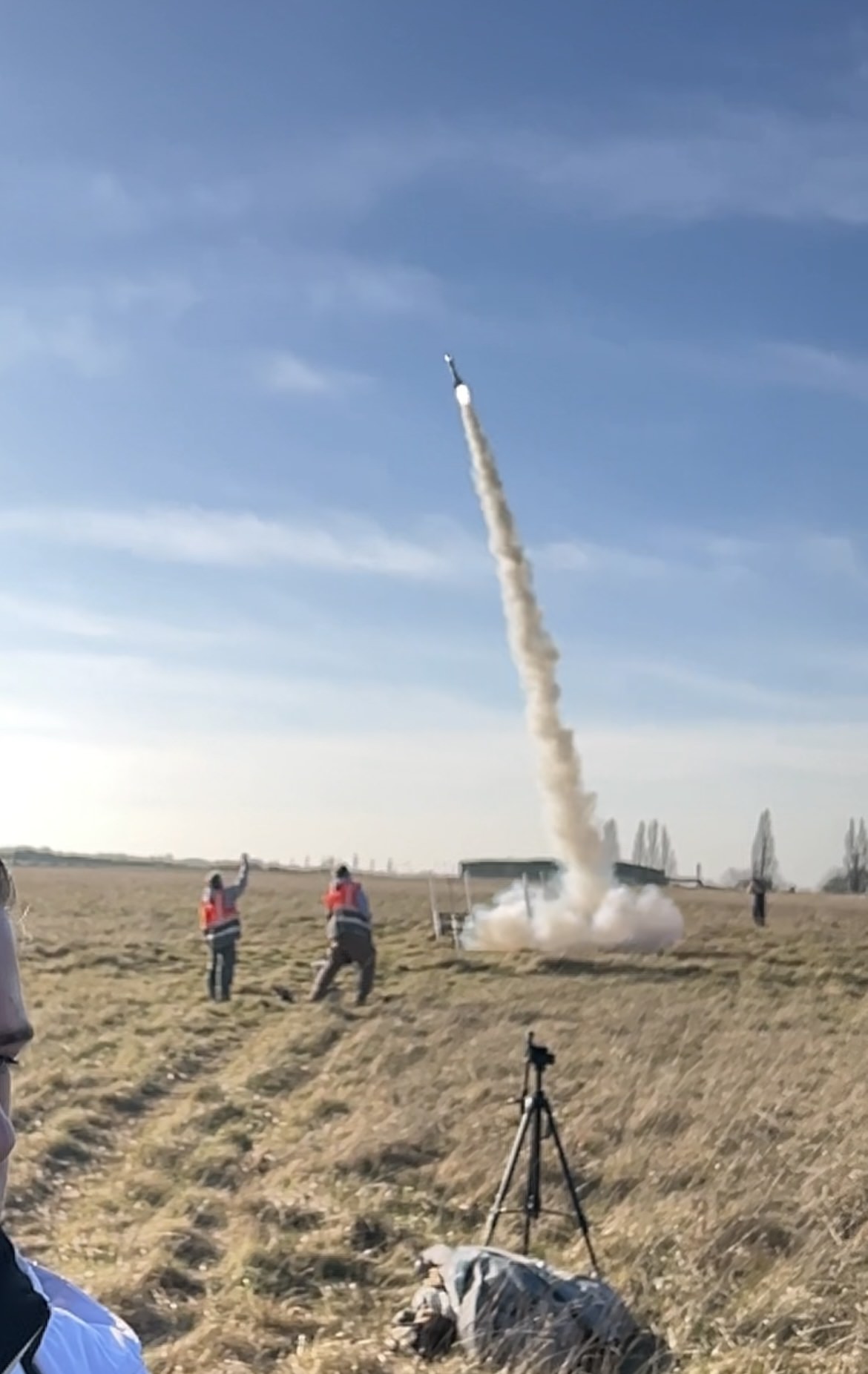
Last week, a group of our enthusiastic Fourth Year and Lower Sixth STEM students embarked on an exciting journey to Buckinghamshire, the culmination of months of dedicated work. Their mission? To test their very own satellite prototypes!
These weren’t your average satellites. Our students had been diligently designing, building, and testing miniature satellites, ingeniously crafted to fit within the confines of a standard fizzy drinks can. The ‘CanSat’ project challenged them to think creatively and apply their scientific knowledge to real-world problems.
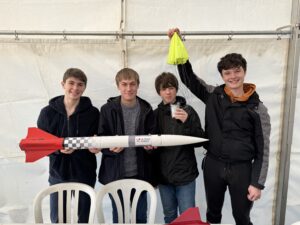
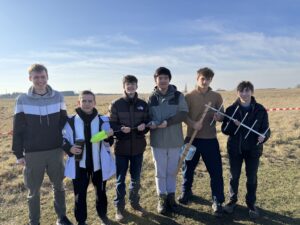
Three Trinity teams developed CanSats: Starman project (Lower Sixth), Project pathfinder (Lower Sixth) and Project Inertia (Fourth Years). The range of missions devised by our budding engineers was truly impressive. Some teams focused on monitoring air quality and pollution, designing sensors to collect vital environmental data. Others tackled the complex challenge of controlled descent, attempting to utilise inertia to guide their satellites back to earth, echoing the pioneering work of SpaceX in America.
The day was a resounding success. Students were able to witness their hard work come to life, watching their prototypes in action and collecting valuable data. The atmosphere was buzzing with excitement as each launch took place, a tangible reward for their dedication and ingenuity.
This trip to Buckinghamshire was more than just a day out; it was a testament to the students’ passion for science and technology. We’re incredibly proud of their achievements and look forward to seeing what they accomplish next!
Report by Mr Manchester, Head of STEM
Oscar Barritt, Lower Sixth student added, “It was a really great experience seeing the culmination of all our work over all these last few months come together in one moment. It was visually very appealing as well: seeing and hearing that rocket go off and watching as our beautiful CanSat successfully returned to earth with its parachute. Although some of the electronics failed on launch day, it’s something we can work on and test at school – the main purpose of the day was testing the integrity of the casing and the parachute, which didn’t fail.
The team has collectively put in a lot of time and effort to get to this stage, and I think it showed. The quality of the CanSat was incredible. There is another stage, which is a national launch day, from a greater height. We’ll find out soon if we got through. Next up, during STEM Week, we’re presenting our CanSat projects to the winners of the Trinity Science Competition, hoping to inspire them.”
…
Last year, one team of Fourth Years from Trinity School, Croydon, entered the competition so it was exciting to have enthusiasm from Sixth Form students this year too. Trinity is currently ranked as
Scroll right to see more stories