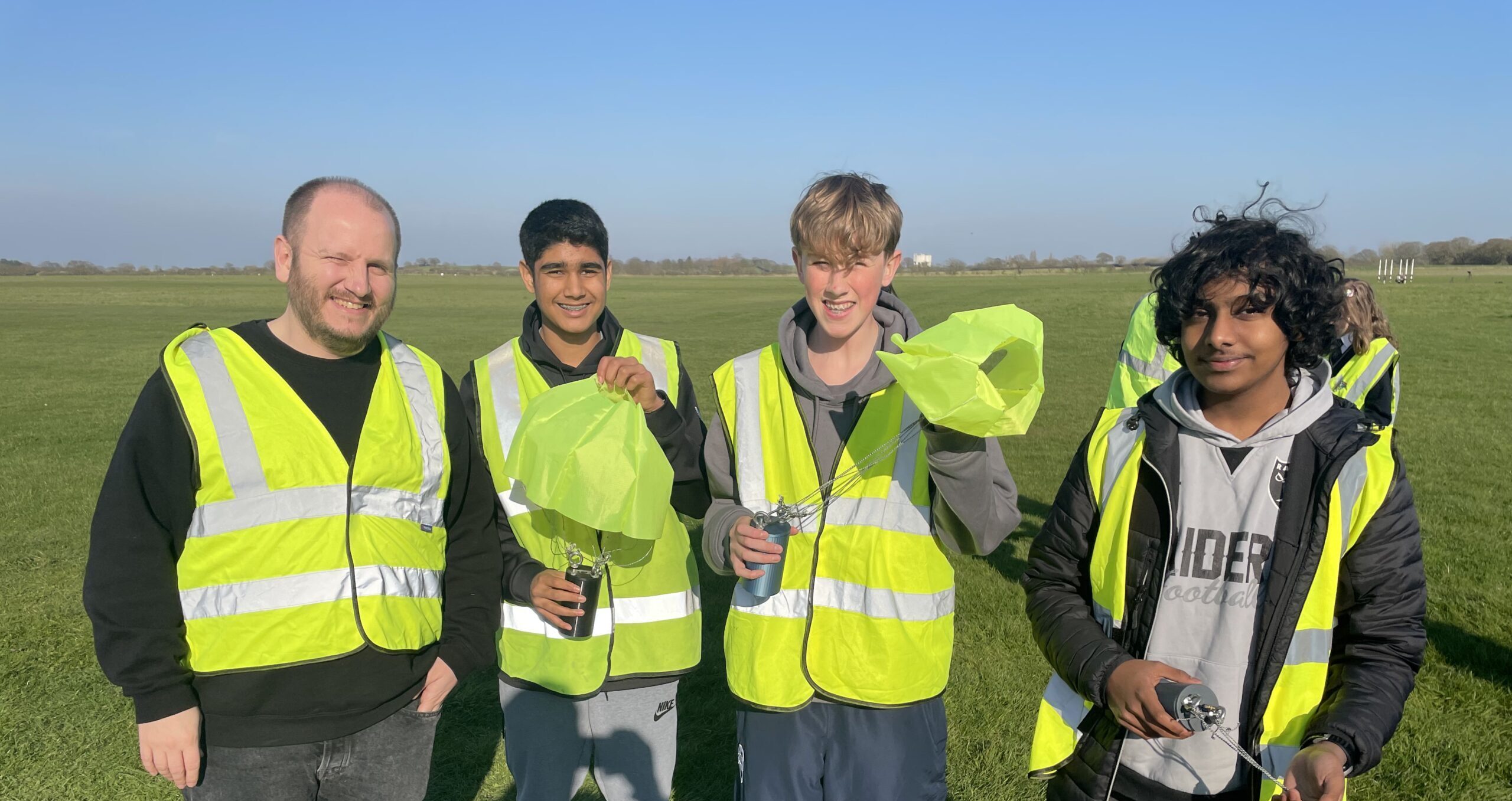
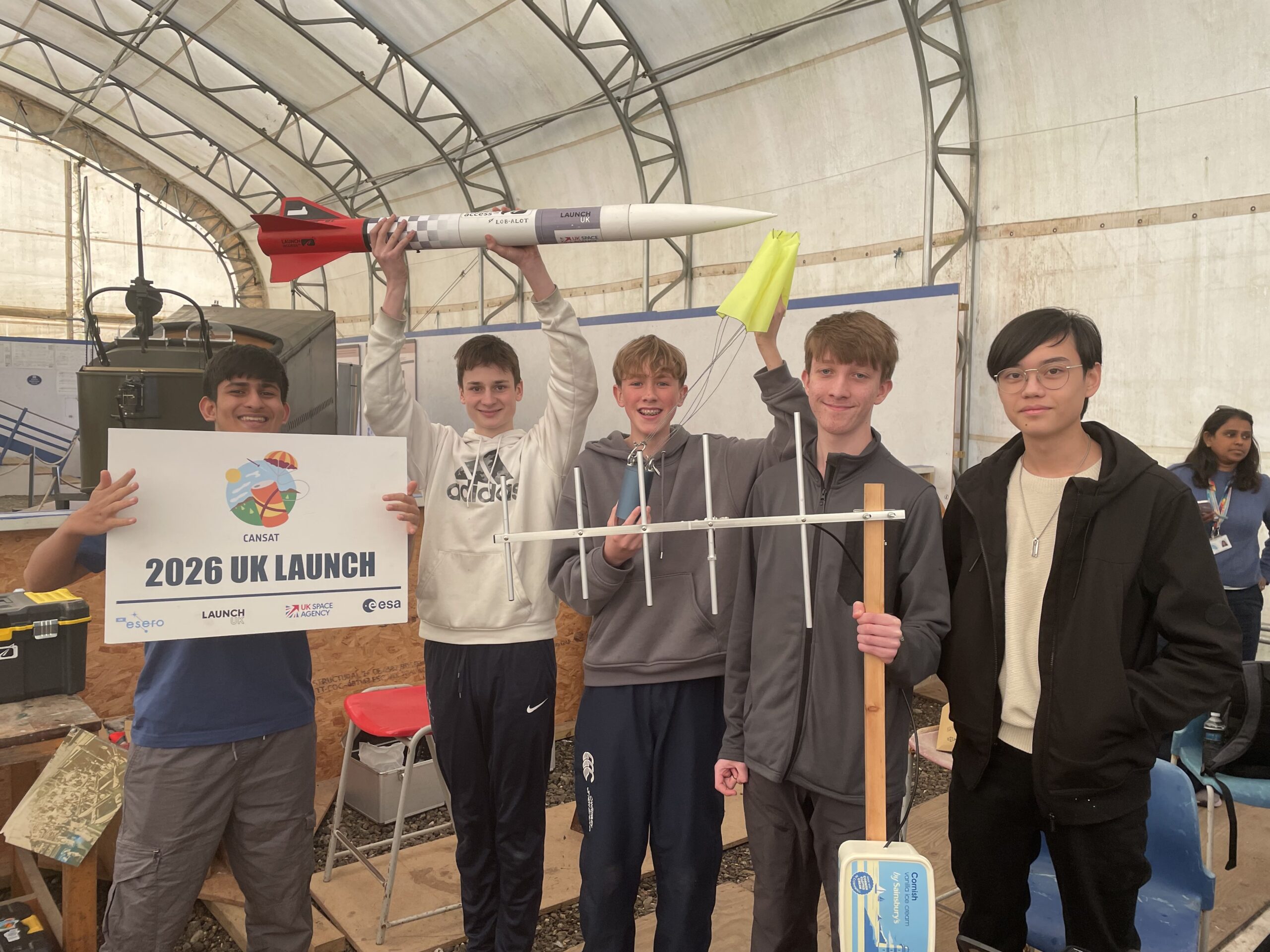
Fifteen Fourth-Year students took part in an exciting trip to Stow Maries Aerodrome in Essex before Easter to launch their CanSat satellite projects. As part of the challenge, each team was tasked with designing and building a fully functional satellite small enough to fit a standard drinks can, complete with onboard electronics programmed to carry out a specific mission.
Once again, the creativity and ambition shown by this year’s students were exceptional. Projects included a satellite designed to detect conditions suitable for life on distant planets, even incorporating a compartment of seeds to deploy if the right environment was identified. Other teams developed systems capable of video reconnaissance, while another created a satellite designed to scan the ground and produce a topographical map.
On launch day, all teams successfully sent their satellites skyward, with each one completing a safe descent thanks to well-designed parachute systems that deployed perfectly. It was a fantastic opportunity for students to see their hard work come to life in a real-world setting.
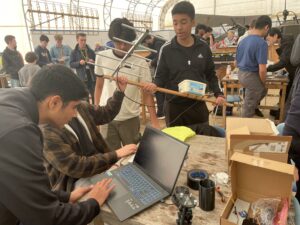
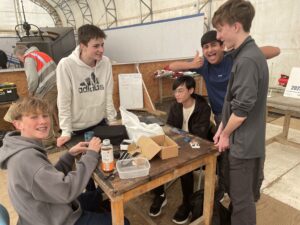
Fourth Year student Aditya said, “It was a great day. Our final preparation for our CanSat included re-soldering wires onto the battery, reducing our parachute length, finalising radio unit frequency, manually checking battery levels with a multimeter and presenting what we have done to the engineering judges. This was actually quite a fun and key part of the trip, but my favourite part was seeing how our team and other teams managed to prepare our final CanSats for launch after months of hard work and it was great to go to the launch site in Essex. Witnessing the actual launch of the CanSats was also really exciting, and there was a lot of suspense viewing our data readings on the laptops.
“I have learned a lot from this whole experience, gaining valuable skills that will be useful throughout life. These skills included leadership as being a project leader, coding, meeting deadlines, project document building, not giving up in adversities. Even though our readings weren’t as successful as we thought they would be after months of preparation, it helped me and my team realise that not everything happens successfully straight away, especially since it was our first time, but it gave us the motivation to keep on trying and come back stronger next year in the CanSat project.”
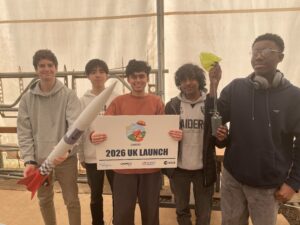
Raphael agreed,”My favourite part of our trip was watching all our CanSats successfully launch into the sky and deploying our seeds which were our secondary mission. Our preparation consisted of fine tuning our CanSat such as putting the electronics and casing together and changing our code radio frequency for real time data transmission to match our CanSat. I learnt a range of things in the STEM sector writing our Critical Design Review such as the role of Volatile Organic Compounds and how you can read them through chemical signalling.”
Josh added, “My favourite part of the trip was watching our satellite finally be launched after all the work we had put into it. I also really enjoyed discovering that our secondary mission was successful, and that our CanSat returned without any breakages despite the primary mission failing. Additionally, we were judged on our model, and the judges seemed very impressed with the quality of our work. While preparing our satellite, we used advanced techniques such as 3D printing and materials including carbon fibre and flexible elastomers to absorb impact. We spent long periods designing the satellite using CAD to fit the dimensions of a soda can. To optimise the parachute, we used computational fluid dynamics simulations, which proved effective as our design performed the best in our launch slot compared to several other schools. We also used computer simulations to engineer a structure that would withstand impact when falling. Throughout the process, we faced multiple challenges, including inconsistent radio connections, which required us to troubleshoot under pressure and within tight deadlines. We also conducted extensive testing before launch and documented our entire process, which required strong writing as well as STEM skills.
Overall, the day was a great success, showcasing not only the students’ ingenuity and teamwork, but also their enthusiasm for engineering and space science. All involved had a brilliant time and took great pride in watching their designs take flight – well done to them!
Scroll right to see more stories