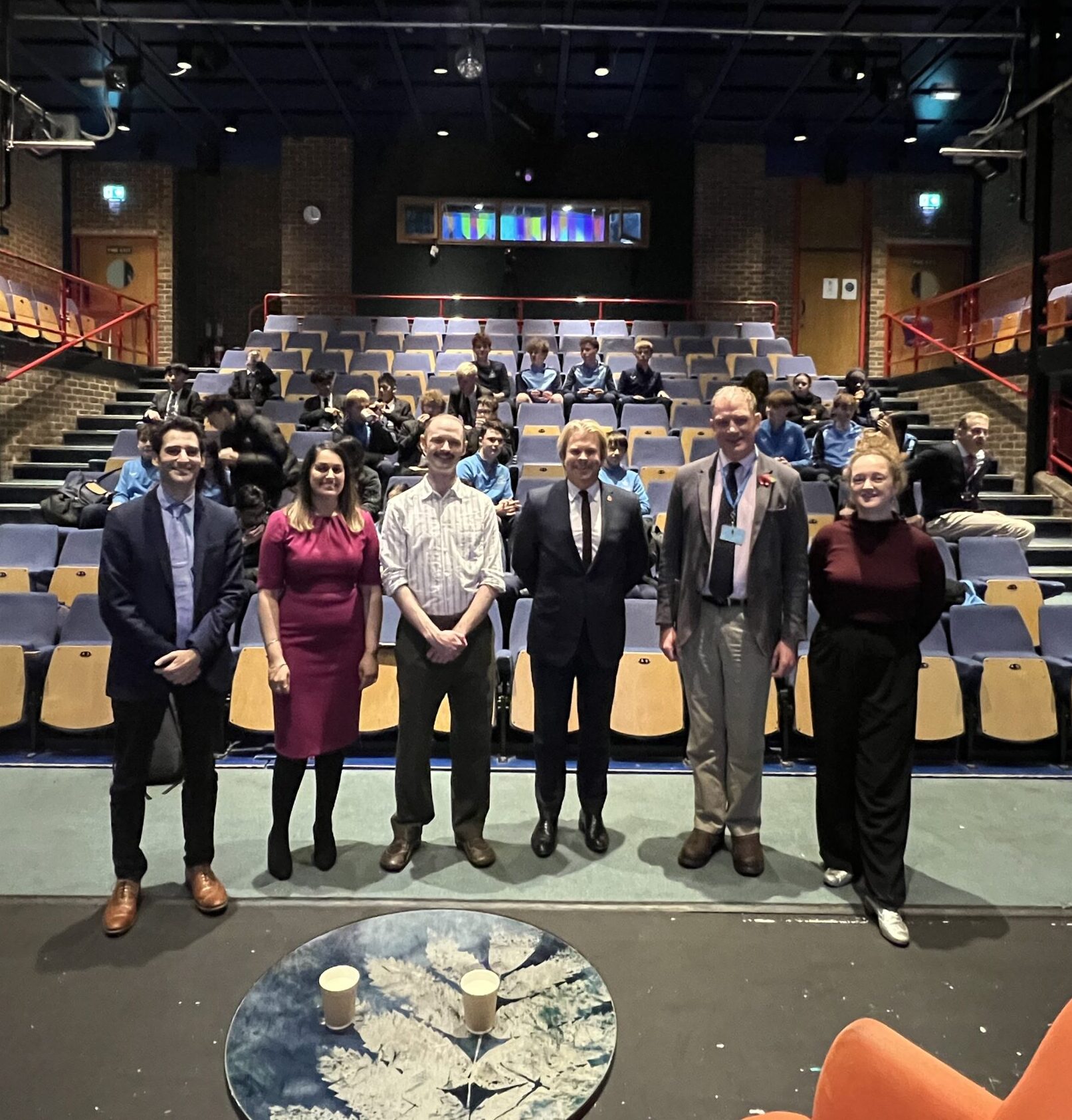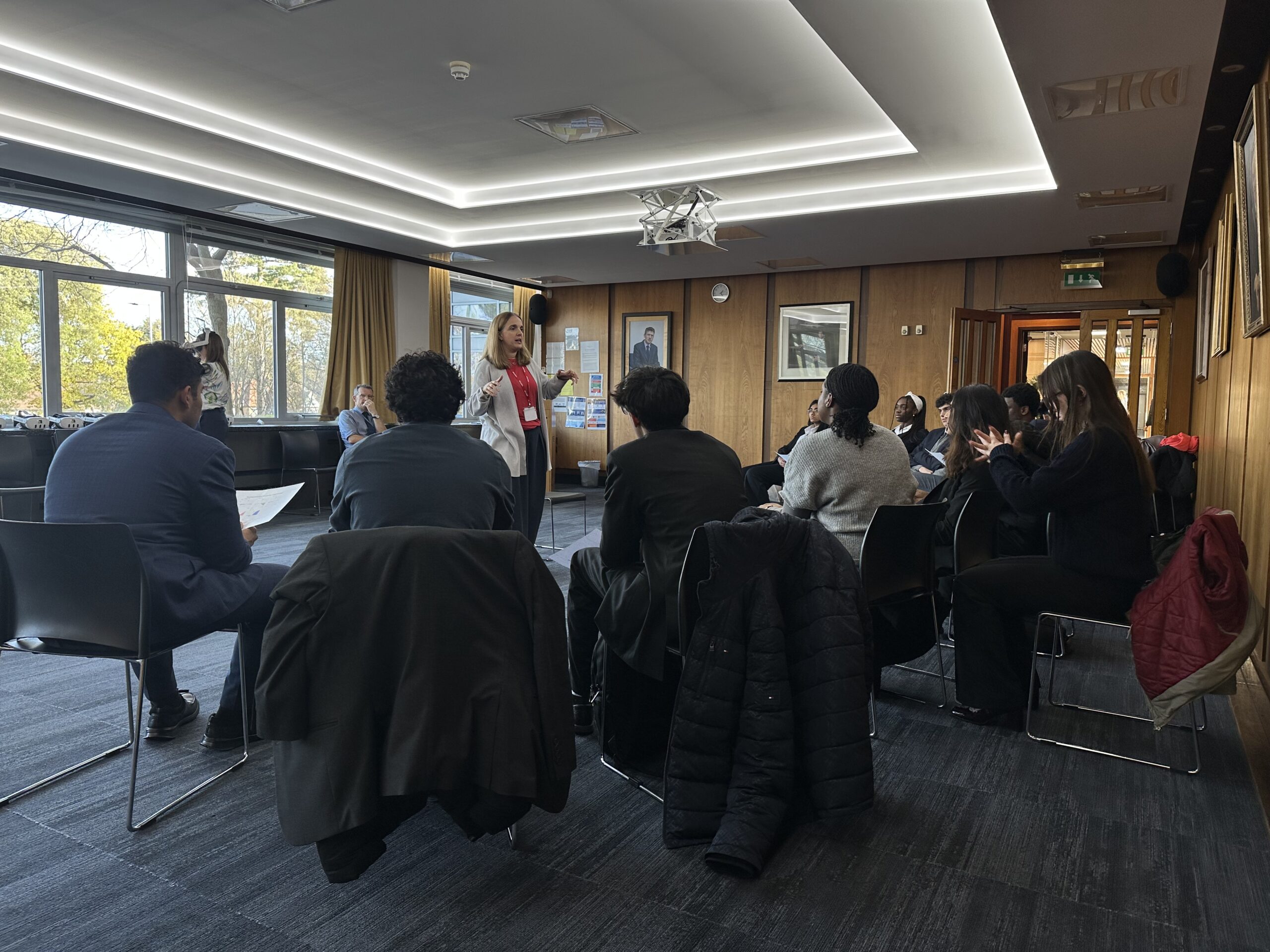
Last week, we were delighted to welcome Dr Natasha Traynier, a Trinity parent and an experienced GP working in Bromley, to speak with Sixth Form students considering a career in Medicine, Dentistry and Veterinary Science.
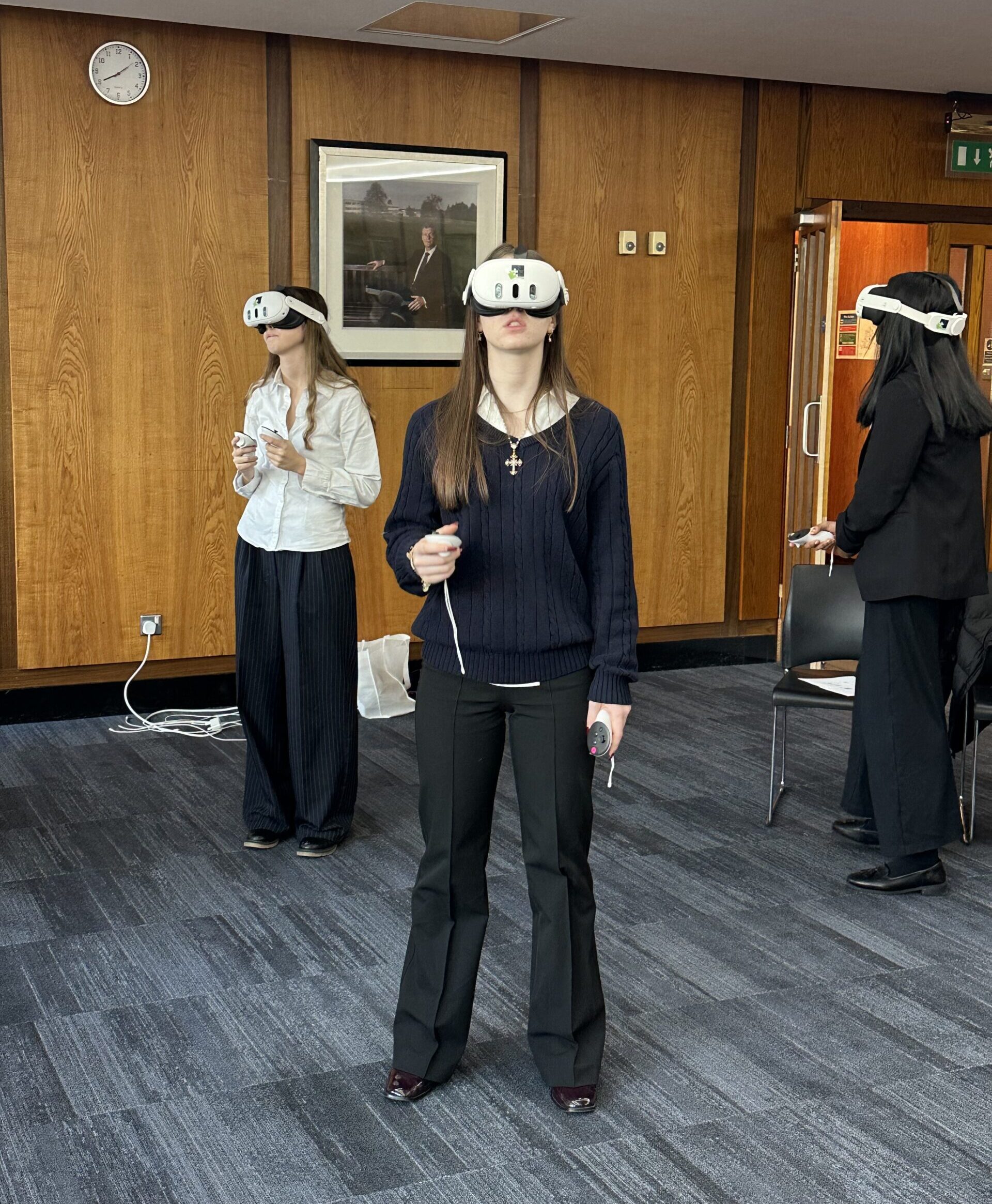
Half of all doctors in the UK work as GPs, and Dr Traynier shared how varied the role can be. Alongside seeing patients, she spends part of her week teaching, leading teams and exploring innovative tools shaping the future of care as part of Primary Care Workforce Academy. Much to the delight of our students, one of those tools is Virtual Reality, and they were able to put on headsets and – in the same way trainee GPs do – immerse themselves in realistic medical scenarios.
During the training sessions, students could improve their decision-making, from navigating confidentiality dilemmas to carrying out home visits and identifying potential hazards.
“The VR headsets give you these stop and think moments,” Dr Traynier explained. “Suddenly you’re in the middle of a multi-disciplinary meeting or stepping into a patient’s home, and you have to decide what to do next. It feels surprisingly real.”
Even Mr Heath, who leads MDV Society, couldn’t resist trying out the headset!

Upper Sixth student Adi said, “Using the VR Headsets was an exciting opportunity for us. The technology was comfortable and intuitive due to the controller and well-made user interface and relied on us making decisions as a GP. I thought the stop-and-think questions helped improve my clinical decision-making and I was able to take time to think and reflect on what I could have done differently. It was also really useful context about the role of a GP within the community, as opposed to clinical settings.”
Upper Sixth Dihain said, “I found the experience highly engaging and immersive. The VR environment made it easy to focus on the clinical scenario and helped bring the decision-making process to life in a way that felt realistic and memorable. One of the most valuable parts of the course was the opportunity to virtually explore a patient’s home during a house visit to identify factors that might justify placing them in care. I now appreciate that this is not just for patients who struggle to attend GP appointments, but also for GPs to gain a much fuller picture of a patient’s daily environment, which is essential for making well-informed decisions about their care.”
Dr Traynier, who recently helped our Upper Sixth MDV students with mock interview practice for UCAS applications, also highlighted the challenges facing the NHS today. She showed our students graphs of the significant shift in population demographics, with fewer young people and a rapidly growing older population. “We’re seeing more frailty, more complex cases and people living longer with multiple conditions,” she said. “It makes the work challenging, but it also shows why thoughtful, committed doctors are so important.”

…
With many thanks to Dr Traynier and her colleague from Primary Care Workforce Academy for sharing their programme. PCWA utilises Meta Quest headsets developed by former teachers at Revolve Labs in their training.
Trinity’s MDV Society offers Sixth Form students interested in pursuing a career in the healthcare industry the opportunity to develop the skills and experience required to apply for MDV degrees and to understand the future pathways available to them in this field of work.
Scroll right to see more stories